

I Ching · King Wen 58
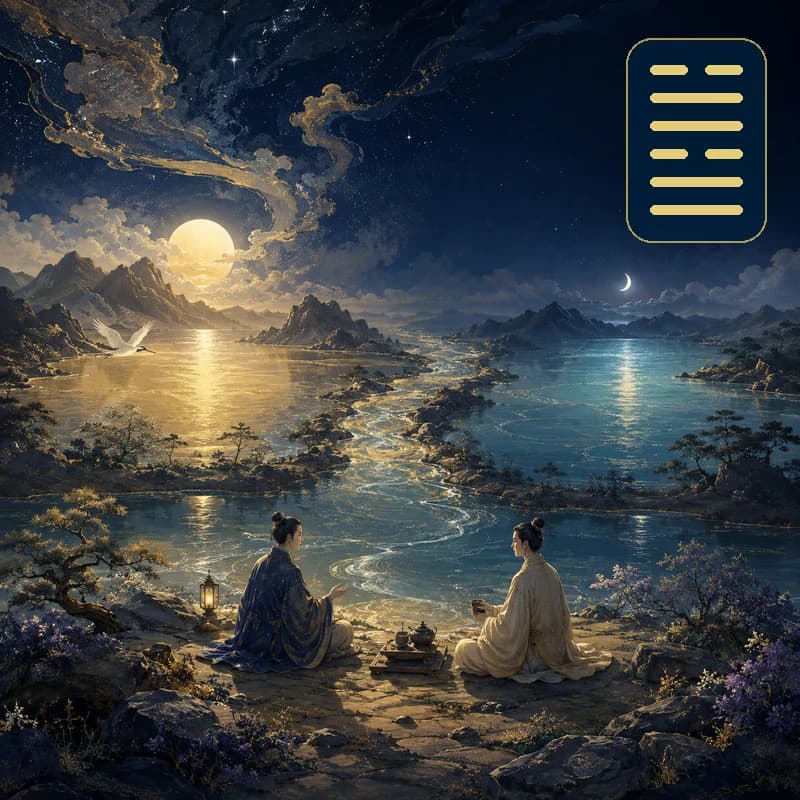
Hexagram 58: The Joyous
䷹ 兌 Duì · also called Lake, Joy, Open · The Joyous above The Joyous
Two lakes joined: joy that is firm within and gentle without, and shared with friends in open conversation.
joyopennessfriendshipfirmnessconversation
The meaning of Hexagram 58
Lake below, lake above: two lakes touching, each replenishing the other. The Joyous is the hexagram of gladness, and its structure explains the tradition's view of it: a firm line within, a yielding line without. True joy is firm inside and gentle outside, not the reverse. The judgement is success, persistence furthers. The image is of friends discussing and practising together, joy that grows by being shared and by being about something. The reading says the situation is one of gladness, or should be, and the lines distinguish the joy that comes from within and from good company from the joy that is sought outside and ends in dissipation.
The image. Lakes resting one on the other; the wise person joins with friends for discussion and practice.
- Advice
- Keep joy firm within and gentle without, and share it in honest company.
- Warning
- Joy sought outside, from flattery or distraction, empties the lake; joy grounded within refills it.
 over
overStructure: ☱ The Joyous (Lake) below, ☱ The Joyous (Lake) above. Nuclear hexagram 37, The Family. Every line reversed: 52, Keeping Still.
Hexagram 58 for love and relationships
Gladness in the relationship, and the reading's counsel on how to keep it: firm inside, gentle outside. Joy that depends on the other person's constant reassurance is the weak kind; joy that is grounded in yourself and shared openly is the lasting kind.
Hexagram 58 for career
Good working relationships, open exchange, the pleasure of learning with others. The reading favours collaboration and honest discussion, and warns against the gladness that comes from flattery or from seeking approval.
Hexagram 58 for money
Enjoyment of what you have, shared. The reading is against spending on pleasure sought from outside, and for the contentment that comes from a firm inner position. Beware of the tempting proposal that brings a false gladness.
Hexagram 58 for decisions
Choose the option that brings real, grounded gladness, and share the deciding with people you trust. The reading is against the choice made to please or to be pleased, and for the one made from inner firmness.
The six changing lines
Read from the bottom. A changing line flips, and the hexagram it changes into is named with each.
Seductive joyousness.
At the top, joy that has lost all firmness and simply follows every pleasure that presents itself. The line offers no judgement of fortune because the outcome depends on whether the person can still stop. Vanity leads; the character follows.
Changing, it becomes Hexagram 10, Treading. Read line 6 →
Sincerity toward disintegrating influences is dangerous.
Trusting someone whose influence is corrosive, out of good faith. The one in authority who does not see the danger in the flatterer nearby. The line warns that sincerity extended to the wrong person is a real risk.
Changing, it becomes Hexagram 54, The Marrying Maiden. Read line 5 →
Joyousness that is weighed is not at peace. After ridding himself of mistakes, a man has joy.
The choice between higher and lower pleasures, deliberated and not yet made. Peace comes only once the lower is given up. The line describes the discomfort of deliberation and the relief of decision.
Changing, it becomes Hexagram 60, Limitation. Read line 4 →
Coming joyousness. Misfortune.
Joy that comes from outside, from distraction and stimulation, because the person has nothing within. The line is blunt: this is the empty kind, and it ends badly.
Changing, it becomes Hexagram 43, Breakthrough. Read line 3 →
Sincere joyousness. Good fortune. Remorse disappears.
Gladness that keeps its integrity even among people of low character, because it is rooted in sincerity. The person is not drawn into the bad company's pleasures; the line credits that firmness.
Changing, it becomes Hexagram 17, Following. Read line 2 →
Contented joyousness. Good fortune.
Quiet contentment that needs nothing from anyone: the joy of someone at peace with their own position. The line is simple and entirely fortunate.
Changing, it becomes Hexagram 47, Oppression. Read line 1 →
Related hexagrams
Cast your own reading
Ask a question and toss six lines. The oracle does not choose the hexagram for you; the coins do.
Ask the I Ching →Common questions
- What does I Ching Hexagram 58 mean?
- Two lakes joined: joy that is firm within and gentle without, and shared with friends in open conversation. Lake below, lake above: two lakes touching, each replenishing the other. The Joyous is the hexagram of gladness, and its structure explains the tradition's view of it: a firm line within, a yielding line without. True joy is firm inside and gentle outside, not the reverse. The judgement is success, persistence furthers. The image is of friends discussing and practising together, joy that grows by being shared and by being about something. The reading says the situation is one of gladness, or should be, and the lines distinguish the joy that comes from within and from good company from the joy that is sought outside and ends in dissipation.
- What does Hexagram 58 mean for love?
- Gladness in the relationship, and the reading's counsel on how to keep it: firm inside, gentle outside. Joy that depends on the other person's constant reassurance is the weak kind; joy that is grounded in yourself and shared openly is the lasting kind.
- Which hexagram does Hexagram 58 change into?
- It depends on which lines change. With one changing line: line 1 gives Hexagram 47, Oppression; line 2 gives Hexagram 17, Following; line 3 gives Hexagram 43, Breakthrough; line 4 gives Hexagram 60, Limitation; line 5 gives Hexagram 54, The Marrying Maiden; line 6 gives Hexagram 10, Treading. With every line changing it becomes Hexagram 52, Keeping Still.