生肖 · The Chinese zodiac
Twelve animals, five elements, sixty years
Everyone knows their animal. Fewer people know that the year turns at Lunar New Year rather than on 1 January, that the animal is one of the eight characters in a full BaZi chart, or that the same animal returns with a different stem element every twelve years.
Which Chinese zodiac animal are you?
Your birthday is all the popular zodiac needs. The year turns at Lunar New Year, not on 1 January, and the calculator uses that date for your birth year.
Read this first if you were born in January or February
The zodiac year begins at Lunar New Year, which falls somewhere between 21 January and 20 February and moves every year. If you were born before that date, your animal is the previous year’s. Someone born on 5 February 1988 is a Rabbit, not a Dragon. The Dragon year did not start until 17 February. Any site that reads your animal straight off the calendar year gets it wrong for roughly one person in ten.
That is the popular Chinese zodiac convention. BaZi, the four-pillar system, turns the year at Li Chun, the start of spring around 4 February, so some January and February births show one animal here and a different year branch in a BaZi chart. Both are correct within their own system, and AsterNym labels which one a page is using.
The twelve animals
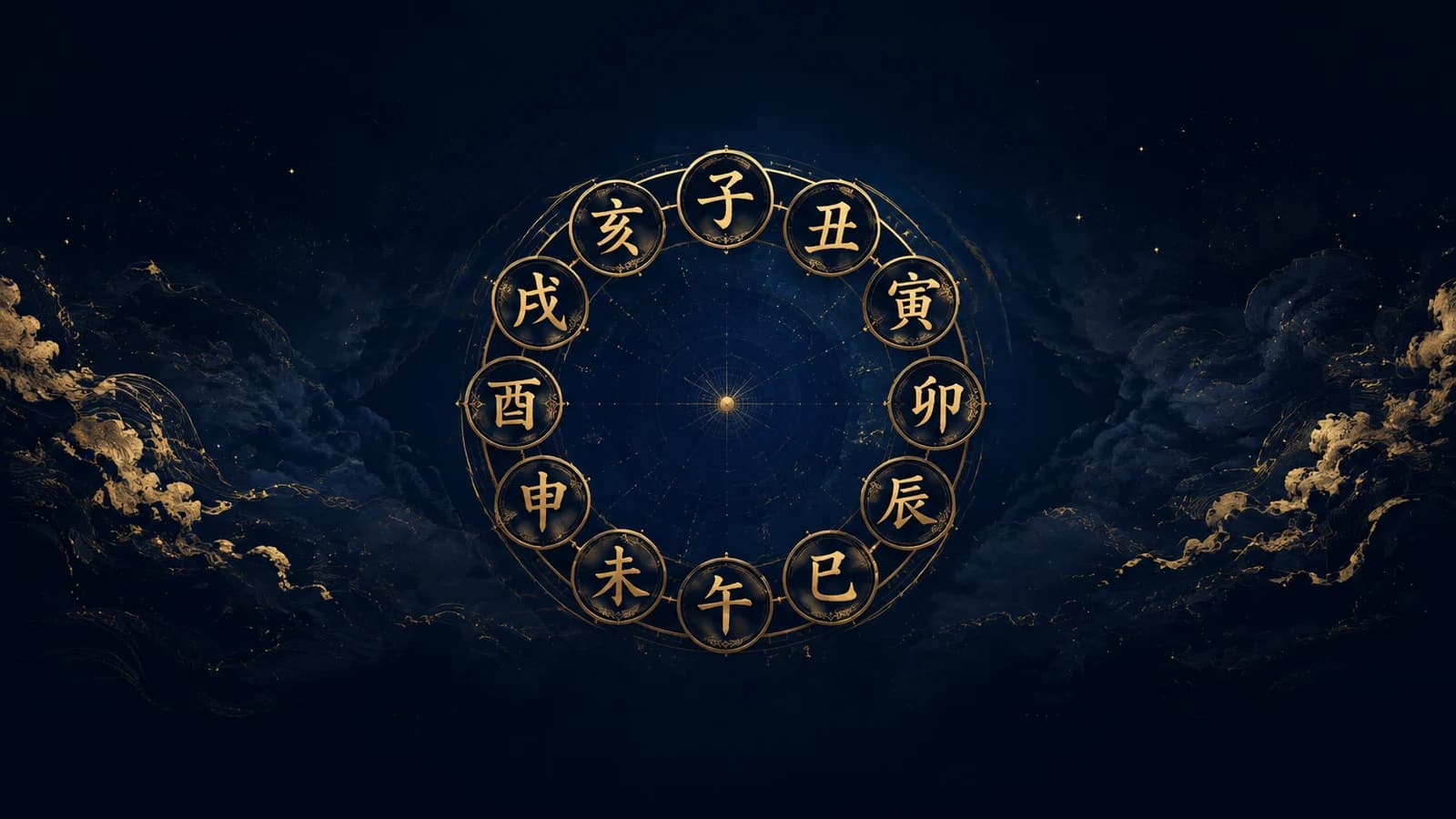
Each animal is an earthly branch, the twelve divisions the Chinese calendar uses for years, months, days and two-hour periods. The character and fixed element beneath each name are that branch’s, and they never change; the element that varies year to year is a separate one, explained below.
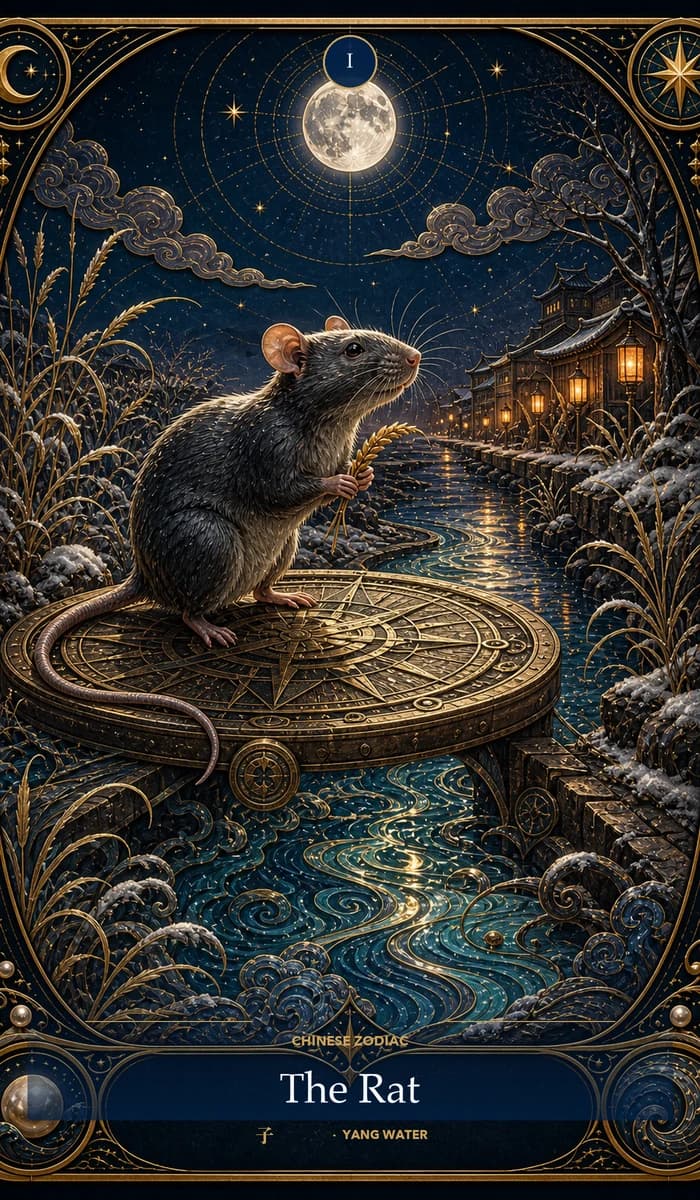
Rat 子
Yang Water branch · 23:00–01:00
Saw the opening before you did.
In popular Chinese zodiac tradition, Rat years are associated with quickness, resourcefulness and an eye for the opening nobody else has noticed. The shadow of that quickness is scatter: too many angles worked at once, and charm spent where patience was needed.
Year of the Rat: years & compatibility →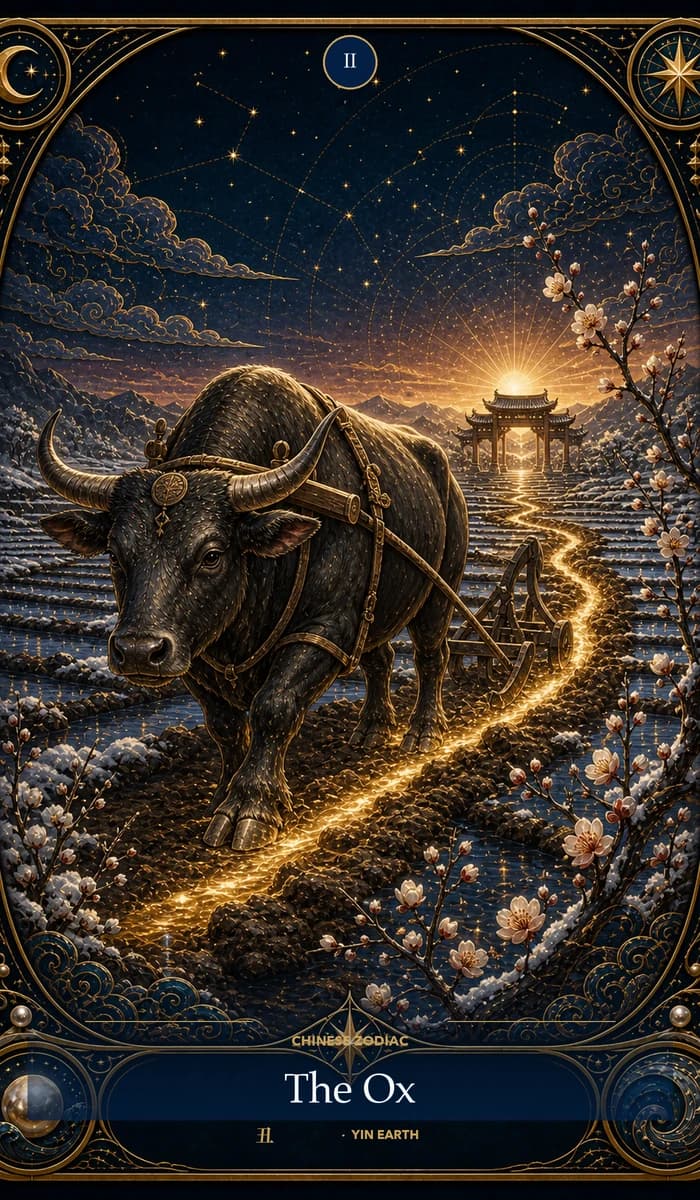
Ox / Buffalo 丑
Yin Earth branch · 01:00–03:00
Slow, steady, never quits.
In popular Chinese zodiac tradition, Ox years are associated with endurance, reliability and finishing what was started, slowly and without complaint. The shadow of that endurance is stubbornness: a furrow that is hard to leave once it has been cut.
Year of the Ox: years & compatibility →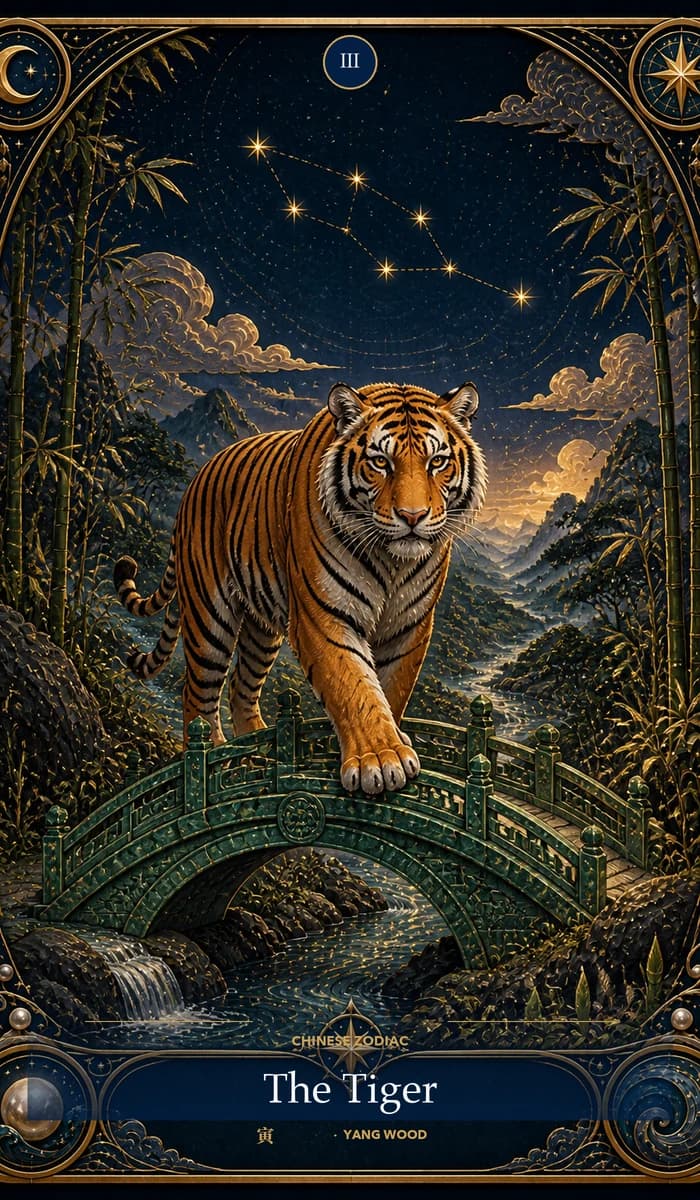
Tiger 寅
Yang Wood branch · 03:00–05:00
Leaps first, apologises never.
In popular Chinese zodiac tradition, Tiger years are associated with courage, presence and the willingness to go first. The shadow of that courage is burnout: a bright start with little left for the long middle.
Year of the Tiger: years & compatibility →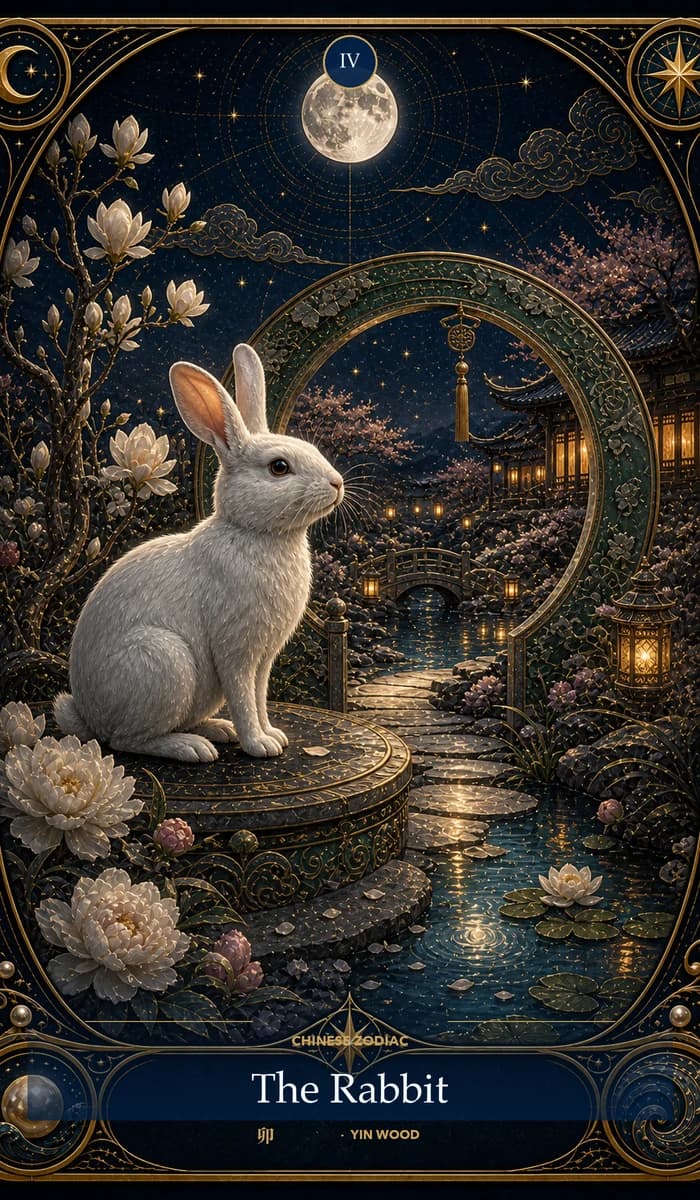
Rabbit / Hare 卯
Yin Wood branch · 05:00–07:00
Three steps ahead, no fuss.
In popular Chinese zodiac tradition, Rabbit years are associated with tact, grace and the ability to settle a room without seeming to try. The shadow of that grace is avoidance: slipping away from a conflict that needed to happen.
Year of the Rabbit: years & compatibility →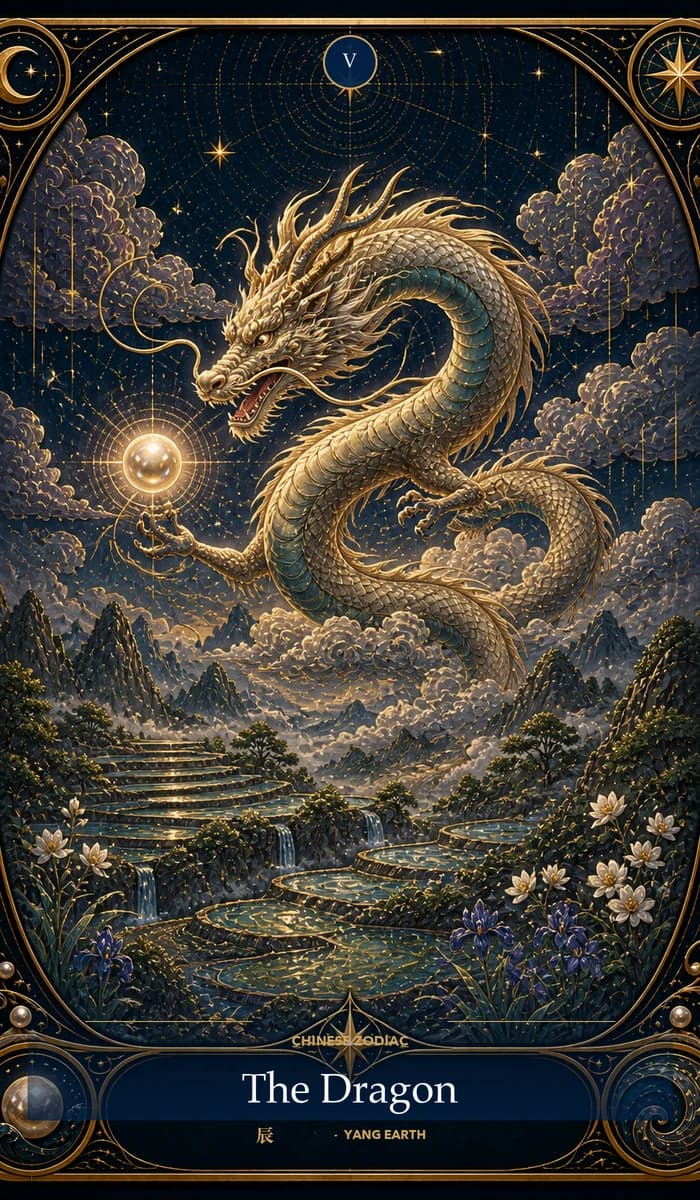
Dragon 辰
Yang Earth branch · 07:00–09:00
Big energy, bigger plans.
In popular Chinese zodiac tradition, Dragon years are associated with confidence, luck and scale: ambition, and attention that arrives whether or not it was sought. The shadow of that scale is impatience with anything too small to be seen.
Year of the Dragon: years & compatibility →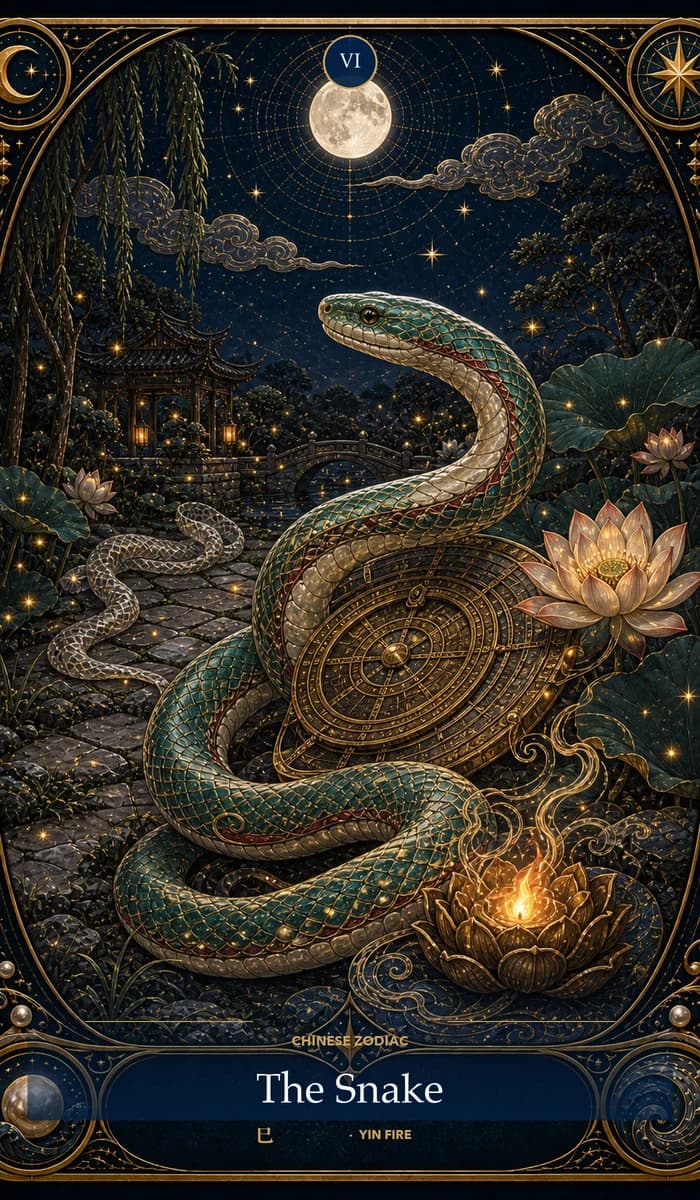
Snake 巳
Yin Fire branch · 09:00–11:00
Watches. Waits. Then precisely.
In popular Chinese zodiac tradition, Snake years are associated with intelligence, composure and depth: thinking before speaking, and saying less than is known. The shadow of that composure is suspicion, and a grudge kept as carefully as a secret.
Year of the Snake: years & compatibility →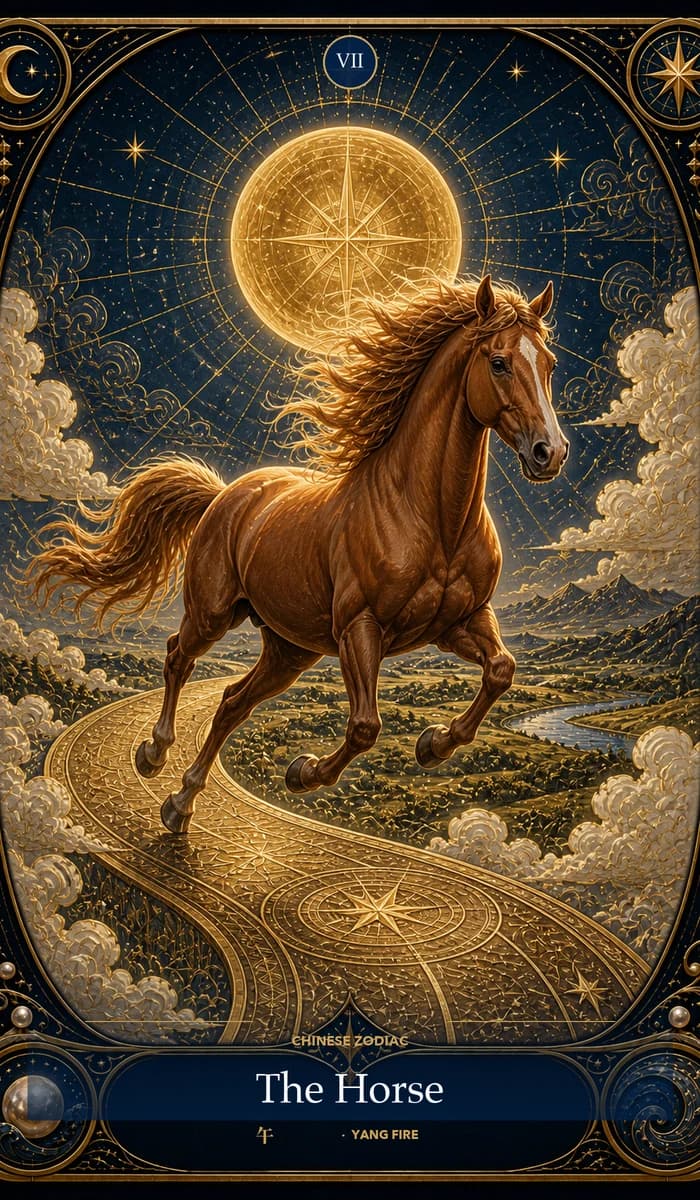
Horse 午
Yang Fire branch · 11:00–13:00
Runs free, catches feelings anyway.
In popular Chinese zodiac tradition, Horse years are associated with independence, energy and forward movement. The shadow of that freedom is restlessness: movement can become escape when standing still is what is required.
Year of the Horse: years & compatibility →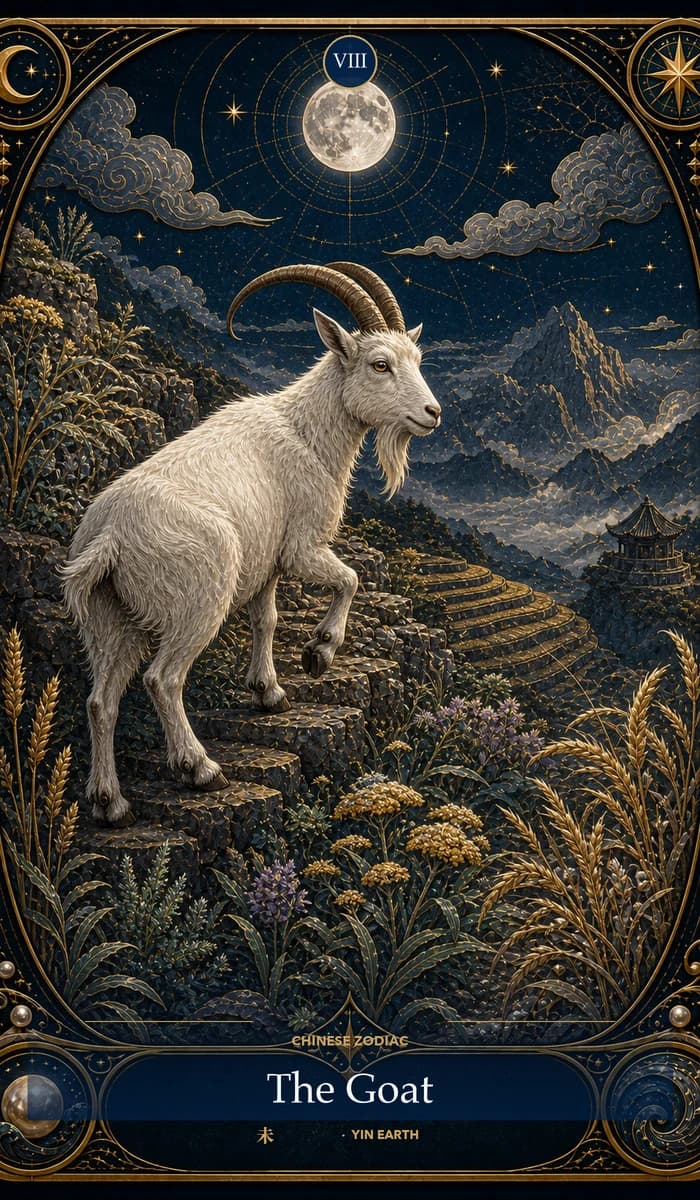
Goat / Sheep / Ram 未
Yin Earth branch · 13:00–15:00
Makes everything a bit more beautiful.
In popular Chinese zodiac tradition, Goat years are associated with gentleness, creativity and a preference for harmony over conflict. The shadow of that gentleness is dependence: a need for reassurance that can become reluctance to decide alone.
Year of the Goat: years & compatibility →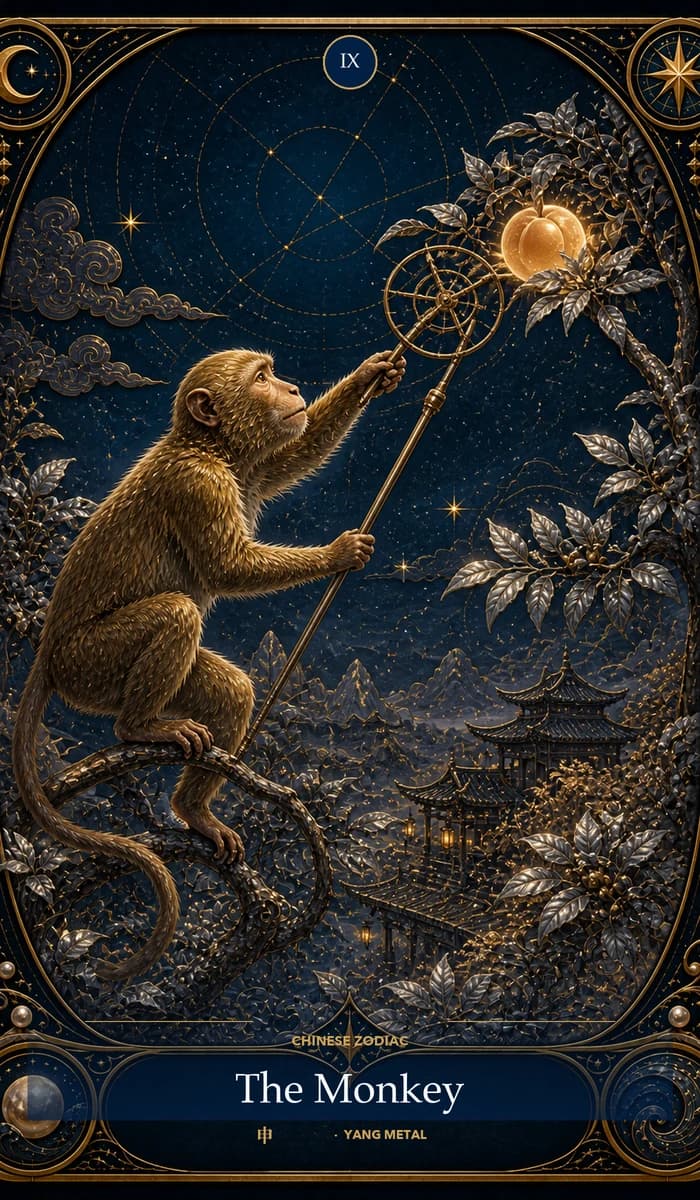
Monkey 申
Yang Metal branch · 15:00–17:00
Solved it, and made a joke.
In popular Chinese zodiac tradition, Monkey years are associated with ingenuity, wit and unconventional solutions to problems others have given up on. The shadow of that wit is mischief, and a trick played one time too many.
Year of the Monkey: years & compatibility →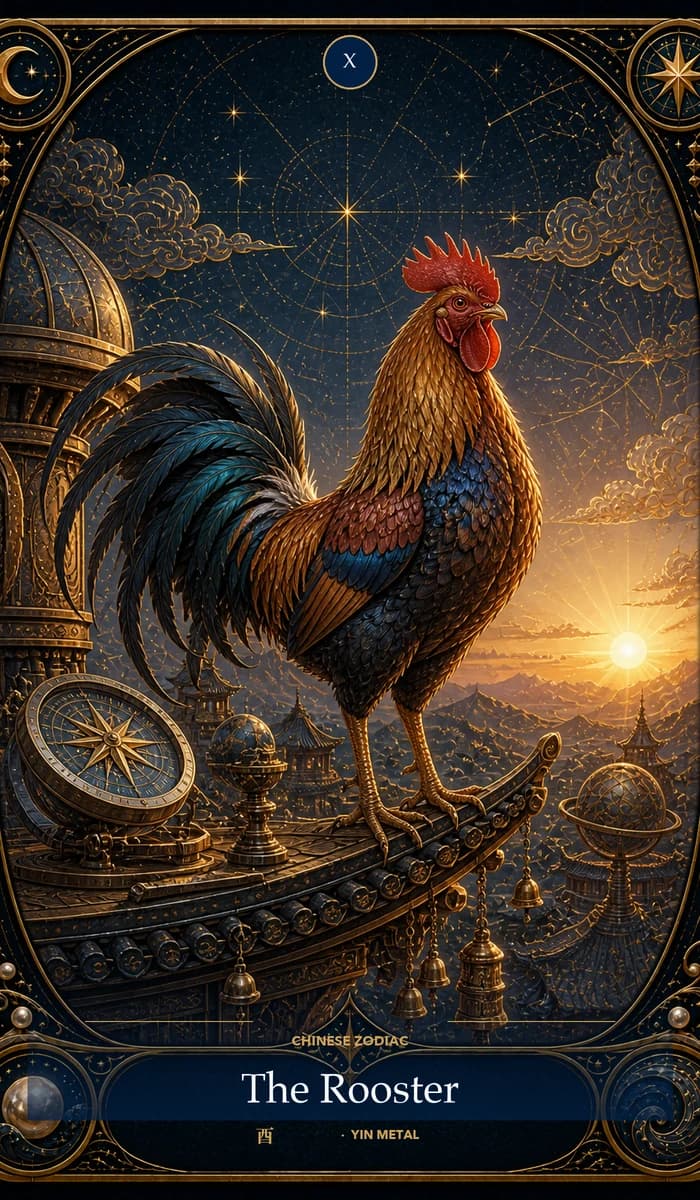
Rooster / Chicken 酉
Yin Metal branch · 17:00–19:00
Says what everyone was thinking.
In popular Chinese zodiac tradition, Rooster years are associated with precision, candour and pride in work done properly. The shadow of that precision is vanity, and a frankness that arrives before anyone asked for it.
Year of the Rooster: years & compatibility →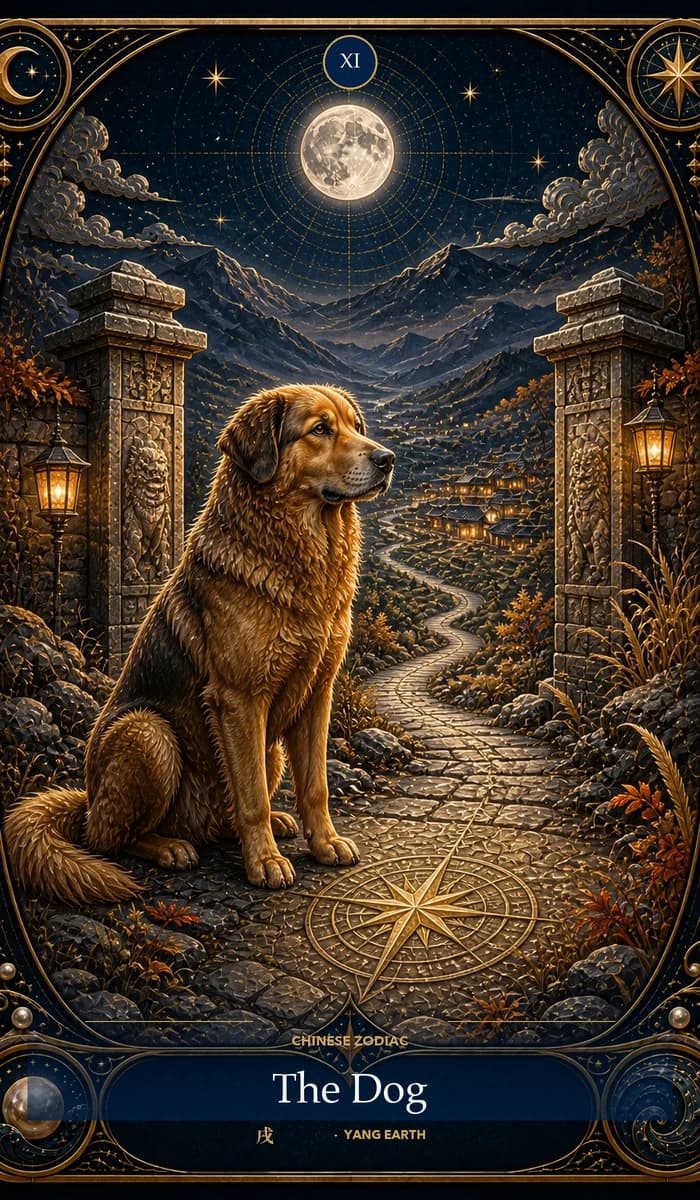
Dog 戌
Yang Earth branch · 19:00–21:00
The first call when it's bad.
In popular Chinese zodiac tradition, Dog years are associated with loyalty, honesty and a strong sense of what is fair. The shadow of that loyalty is anxiety: a watchfulness that does not know when to stand down.
Year of the Dog: years & compatibility →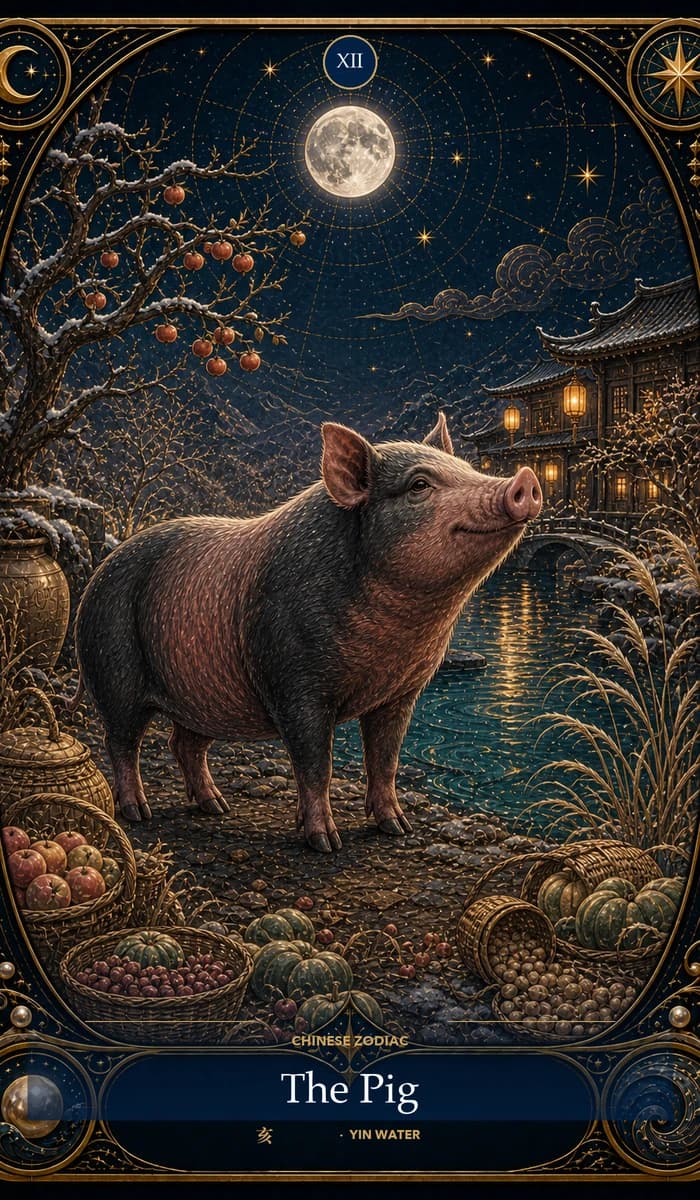
Pig / Boar 亥
Yin Water branch · 21:00–23:00
Trusts easily. Rarely regrets it.
In popular Chinese zodiac tradition, Pig years are associated with generosity, sincerity and an appetite for good things, shared. The shadow of that generosity is naivety, and a difficulty believing anyone would take advantage of it.
Year of the Pig: years & compatibility →
Why the same animal feels different
Alongside the twelve animals run the five elements: Wood, Fire, Earth, Metal and Water, each covering two consecutive years, first in its yang form and then its yin. A Wood Dragon and a Water Dragon share the same Dragon branch but pair it with different Heavenly Stems, adding another elemental layer to the year.
Because twelve and five only come back into step after sixty years, a full animal-and-element pairing returns once a lifetime rather than once a decade. That sixty-year round is the sexagenary cycle, and reaching your own sixtieth birthday, your original pairing coming back around, is a traditional milestone across China, Korea and Japan.
How the branches relate
The twelve Earthly Branches are the units the Chinese calendar uses for years, months, days and two-hour periods. The animals came later, as mnemonics attached to the branches. In technical Chinese metaphysics the branch is the important piece and the animal is its familiar name, which is why the relationships below are relationships among branches, and why they come before any compatibility chart.
Three traditional structures relate the twelve branches. Popular compatibility charts simplify them into who gets along; the structures come first.
Three Harmonies · 三合
The Water Three Harmony: three branches that combine toward Water. A relationship among branches, not a promise that every pair is an ideal couple.
The Metal Three Harmony: three branches that combine toward Metal. A relationship among branches, not a promise that every pair is an ideal couple.
The Fire Three Harmony: three branches that combine toward Fire. A relationship among branches, not a promise that every pair is an ideal couple.
The Wood Three Harmony: three branches that combine toward Wood. A relationship among branches, not a promise that every pair is an ideal couple.
Six Harmonies · 六合
- Rat 子 + Ox 丑
- Tiger 寅 + Pig 亥
- Rabbit 卯 + Dog 戌
- Dragon 辰 + Rooster 酉
- Snake 巳 + Monkey 申
- Horse 午 + Goat 未
Six paired branch combinations, read for quiet support; popular tradition calls the partner a secret friend.
Clashes · 六冲
Six pairs sit directly opposite each other in the twelve-branch cycle. Traditionally read as friction to be handled, not a warning to stay apart:
- Rat ↔ Horse
- Ox ↔ Goat
- Tiger ↔ Monkey
- Rabbit ↔ Rooster
- Dragon ↔ Dog
- Snake ↔ Pig
These describe year branches only. AsterNym’s match reads the day pillars against each other as well, which is what the tradition uses for relationships, and no chart comparison is a prediction about two real people.
Your animal is one of eight characters
A full Chinese chart, BaZi, the “eight characters”, has four pillars, one each for your year, month, day and hour of birth, each holding a Heavenly Stem and an Earthly Branch. Your zodiac animal is the Earthly Branch of the year pillar: one of those eight characters, the outermost layer, the one that describes your generation and how you meet the world.
Tradition reads the day pillar as the person themselves. Its heavenly stem is your Day Master, the element a BaZi reading is built around. That is why two people who share an animal can be nothing alike, and why an hour of birth adds a whole pillar the year cannot.
See my full four-pillar chart →Common questions
- How do I find my Chinese zodiac animal?
- It comes from the year you were born, but the year turns at Lunar New Year, which falls between 21 January and 20 February, not on 1 January. Anyone born in that window belongs to the previous year's animal, so so many people are given the wrong sign by charts that use the calendar year.
- Why does my sign differ from what another site says?
- Usually the boundary. For the popular Chinese zodiac, AsterNym uses Lunar New Year rather than 1 January: someone born on 5 February 1988 is a Rabbit, not a Dragon, because the Dragon year did not begin until 17 February. BaZi uses a different convention, Li Chun around 4 February, so some January and February births show different year animals in the two systems.
- Is the animal the whole reading?
- No. A BaZi chart has four pillars containing eight characters, and your familiar zodiac animal is the Earthly Branch of the year pillar: one of those eight. The day pillar, not the year, is the one tradition reads as the person themselves.
- What is the 60-year cycle?
- Twelve animals combine with five elements, each element covering two consecutive years as yang then yin. Twelve and five run together for sixty years before the same animal-and-element pairing returns, so a Yang Wood Dragon recurs once every sixty years, not every twelve.
- Why can a Horse be a Metal Horse if the Horse is a Fire branch?
- The animal's Earthly Branch has its own elemental association, and it never changes: Horse is a Fire branch. Each year also has a Heavenly Stem with a separate element. 'Metal Horse' means a Metal stem paired with the Horse branch; it does not mean the Horse branch itself becomes Metal.
- Are some animal pairings really incompatible?
- The tradition names harmonious and clashing pairs, and they are worth knowing as a lens. They are not a verdict on a relationship: a clash is read as friction that needs handling, and plenty of long marriages are built on one.
Reading on the Chinese zodiac
The animals in longer form, the true new-year boundary, the compatibility claims, and where the folklore came from.
- How the Chinese zodiac differs across Vietnam, Korea and Japan
The same twelve branches, adapted by every culture that took them up, and one famous substitution. The animals are labels; the branches are the thing.
4 min read
- Dragon babies: the real demographics behind the belief
The effect is real and shows up in national statistics, and what it does is more interesting than a spike. I was a maternity-ward statistic myself.
4 min read
- 2027, Year of the Goat: what it means for every sign
丁未, Yin Fire Goat, turning on 4 February 2027, and what a year forecast can and cannot say. Read it as almanac weather.
4 min read
- Inner, outer and secret animals: the Four Pillars connection
Four animals, not one, and three of them come from information most people never enter. The labels are Western; the pillars underneath are real.
4 min read
- Why your Chinese sign might be wrong
Three year boundaries are in use, and if you were born in January nobody agrees which animal you are. Here is how to settle it.
4 min read
- Your animal plus your element: the 60-year cycle
Twelve animals, five elements, and a cycle that only closes after sixty years. Your stem matters more than your animal.
4 min read
- Compatibility triangles: the four trines explained
Four groups of three, evenly spaced round the circle, and a compatibility claim with a geometric basis and nothing more.
4 min read
- The 12 animals and how the race story goes
Twelve animals, one river, and a rat who got a lift. A nursery story attached to a working calendar.
4 min read
- Zodiac clashes and the ben ming nian year
Your own year is the difficult one, which surprises almost everybody who asks me. Wear the red if you like it.
5 min read
- Chinese zodiac hours and your birth hour animal
Twelve animals, twenty-four hours, and a second animal almost nobody knows they have. The Rat hour is where readings go wrong.
4 min read
- The twelve Day Officers, and how Chinese date selection works
A twelve-day cycle that decides whether today suits starting something, finishing it, or getting rid of it. The most usable page in the almanac.
4 min read
- What is feng shui?
It is not about tidying, and the version sold in the West is roughly one per cent of it. Form school is the part I would keep.
4 min read
- Flying Star feng shui: the one that changes with time
The school of feng shui that adds time, and the reason every consultant in Hong Kong talked about 2024. Its advice comes with an expiry date.
4 min read
- Your Kua number, and why it splits households
Four good directions, four bad ones, and a real problem when two people in one bed disagree.
2 min read
- The Lo Shu square: the oldest magic square there is
Three thousand years old, load-bearing in Chinese metaphysics. The birthday version is the new part.
2 min read
- Yin and yang: the idea underneath everything else
The most misunderstood idea in Chinese thought, and the characters mean the two sides of a hill.
2 min read