
The chart bodies
Ten chart bodies, ten jobs
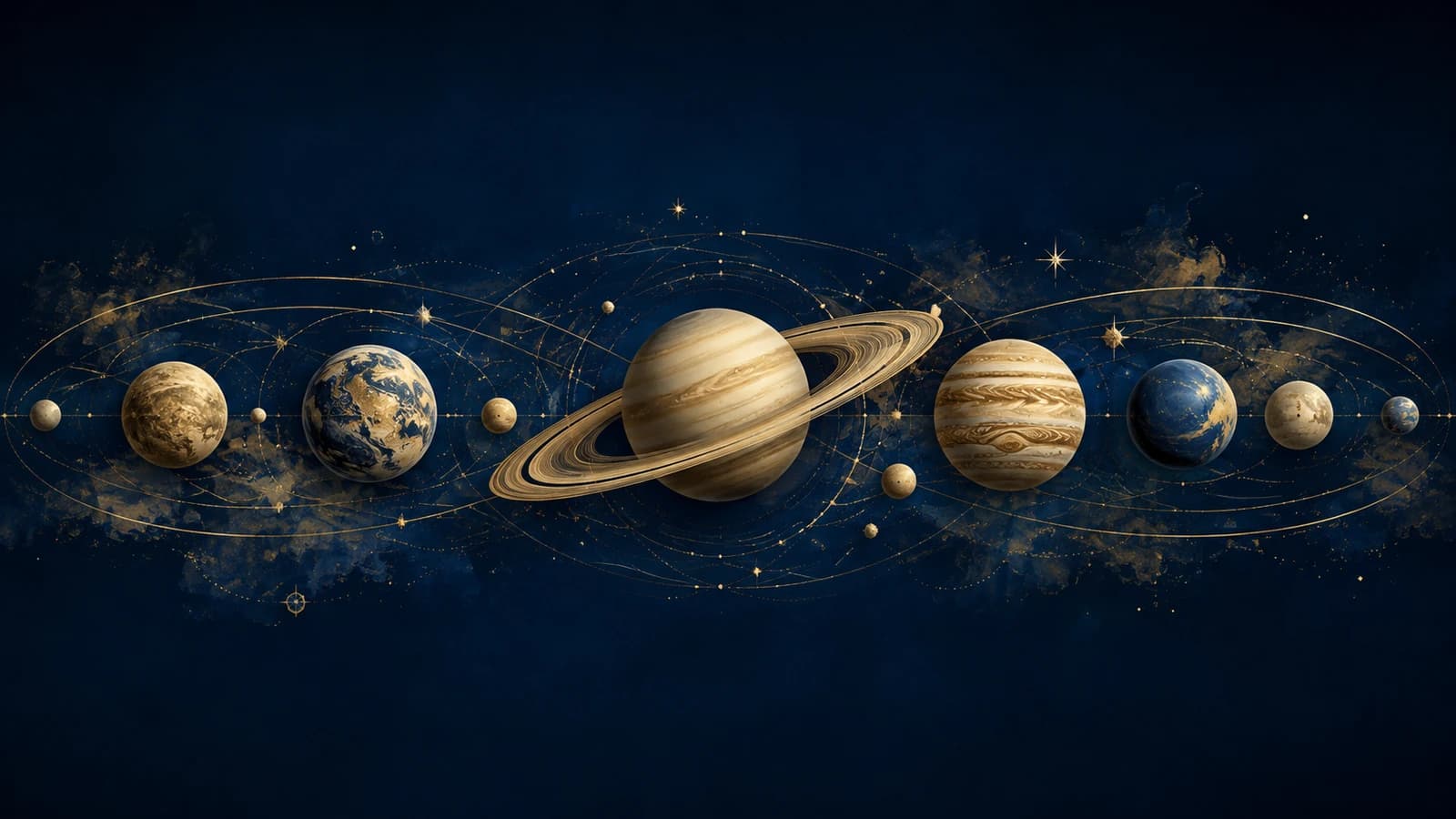
A birth chart is not one thing but ten, each describing a different part of a life. Astrologers conventionally group the Sun, Moon, seven planets and Pluto together as chart bodies, even though astronomically the Sun is a star, the Moon a satellite and Pluto a dwarf planet.
Luminaries
The two lights of the chart.
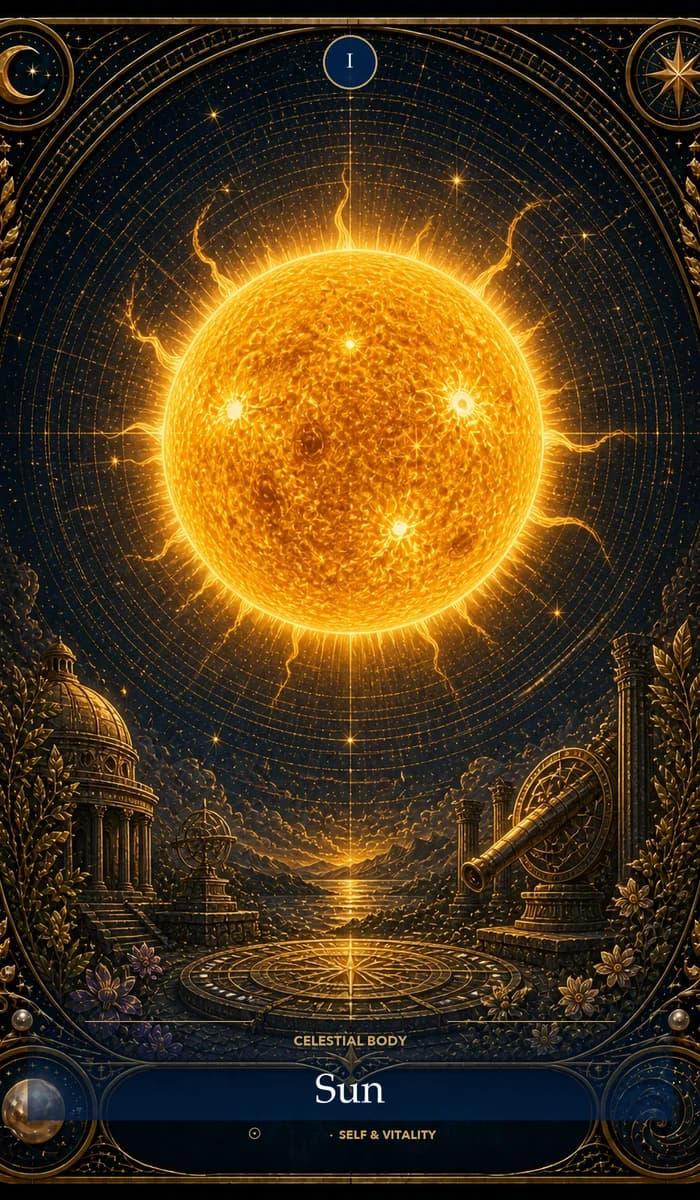
Sun
What you are here to become.
your core self: identity, vitality, what you are here to become.
About a month in each sign. This is your familiar “star sign”.
Explore Sun →
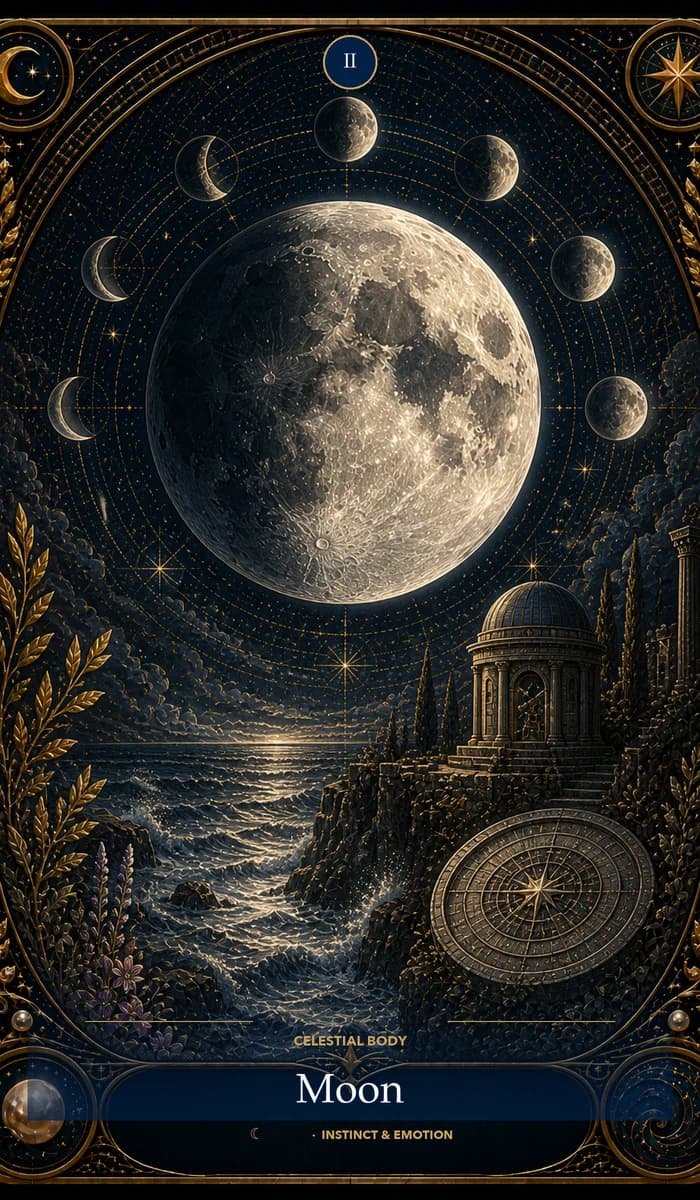
Moon
What you need to feel safe.
your inner life: feelings, instincts, what you need to feel safe.
Roughly two and a half days in each sign. The Moon moves about 13° per day, making it the most birth-time-sensitive of the ten chart bodies.
Explore Moon →
Personal planets
Move quickly enough to differentiate people born weeks or months apart.
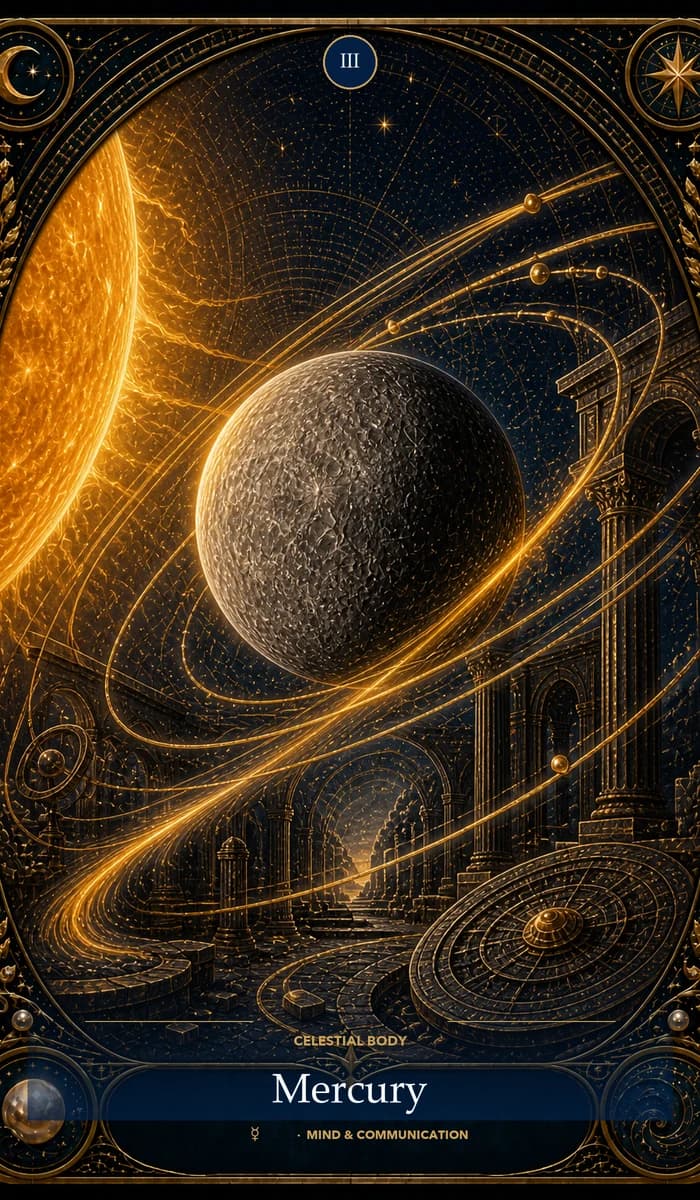
Mercury
How you think, speak and connect ideas.
your mind: how you think, speak, learn and connect ideas.
Two to three weeks in a sign, with three retrograde stretches a year.
Explore Mercury →
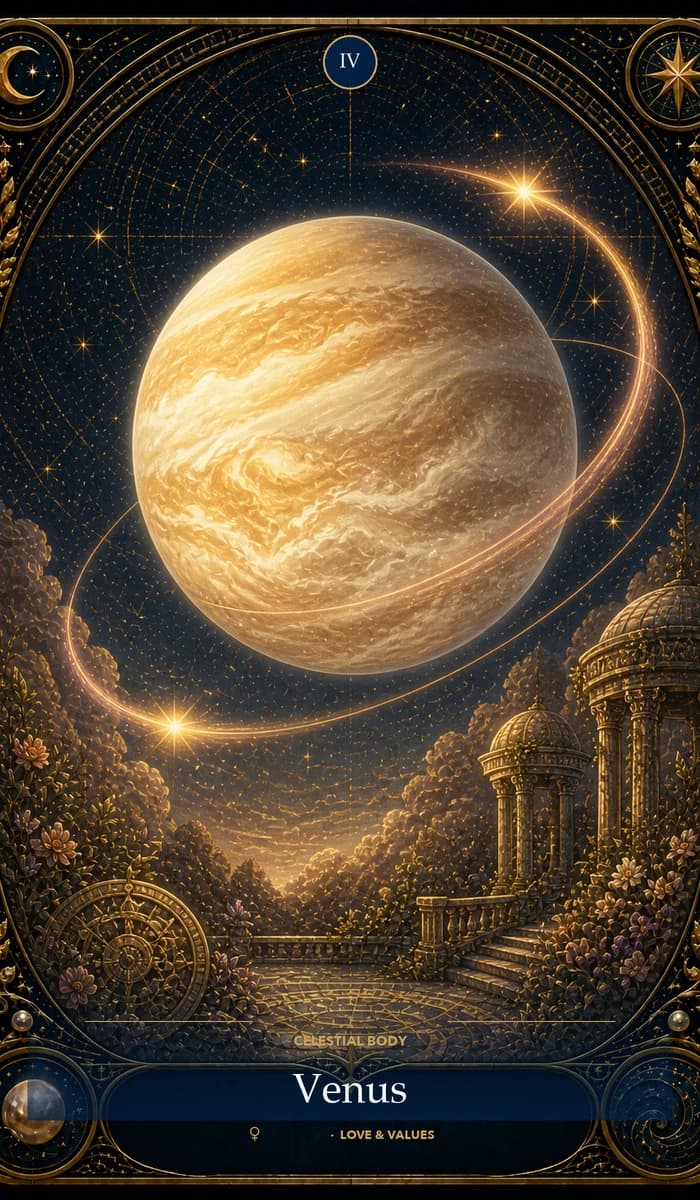
Venus
How you love and what you find beautiful.
your affections: how you love, what you find beautiful, what you value.
About four weeks in a sign, never more than 48° from the Sun.
Explore Venus →
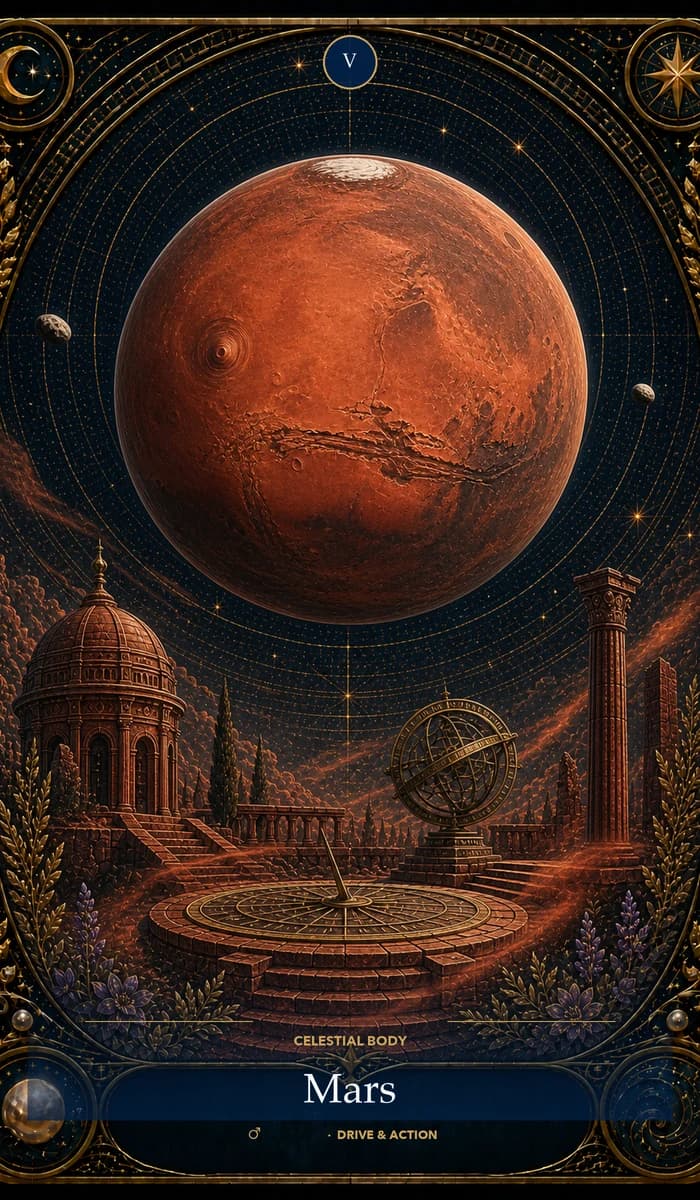
Mars
How you act, want and fight.
your drive: how you act, assert, desire and fight.
Six to seven weeks in a sign, longer when retrograde.
Explore Mars →
Social planets
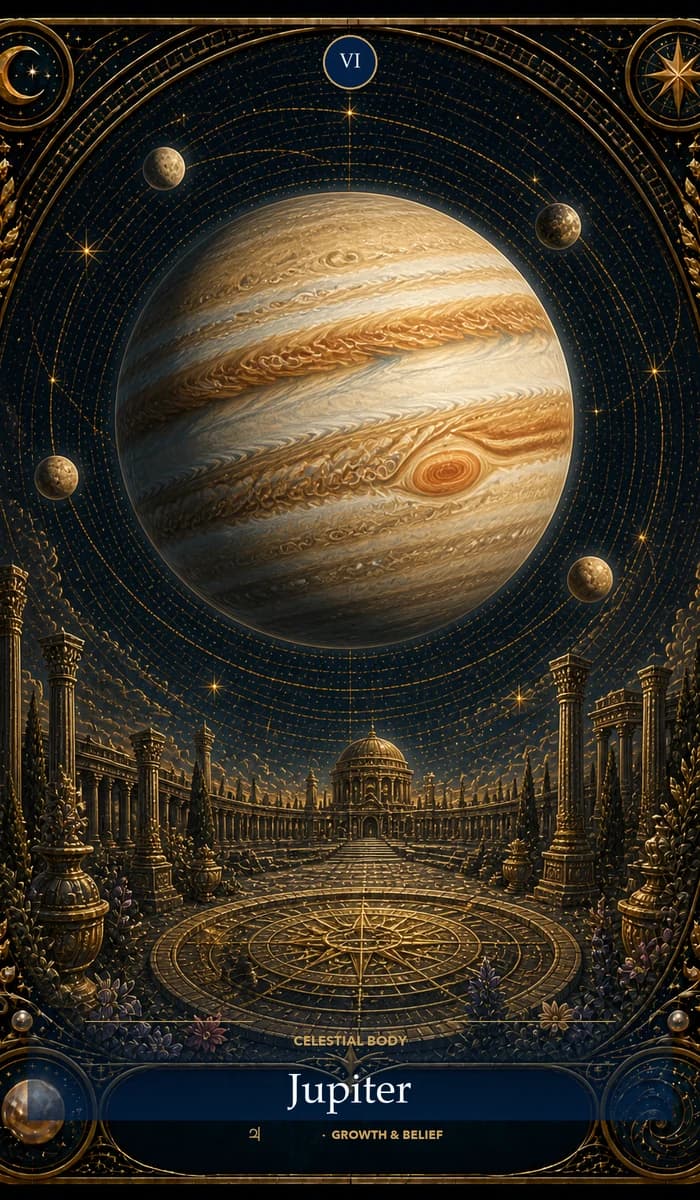
Move more slowly; often read through belief, limits, social development and maturation.
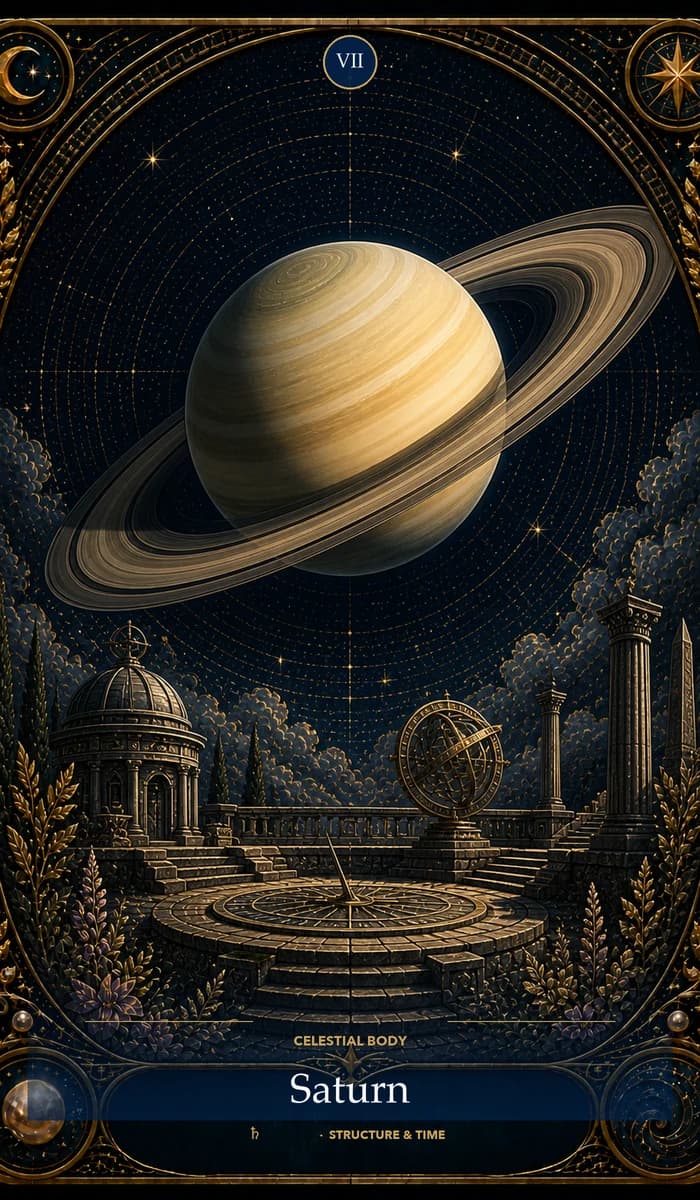
Outer, or transpersonal, planets
Spend years in a sign, so their sign positions are shared by whole cohorts.
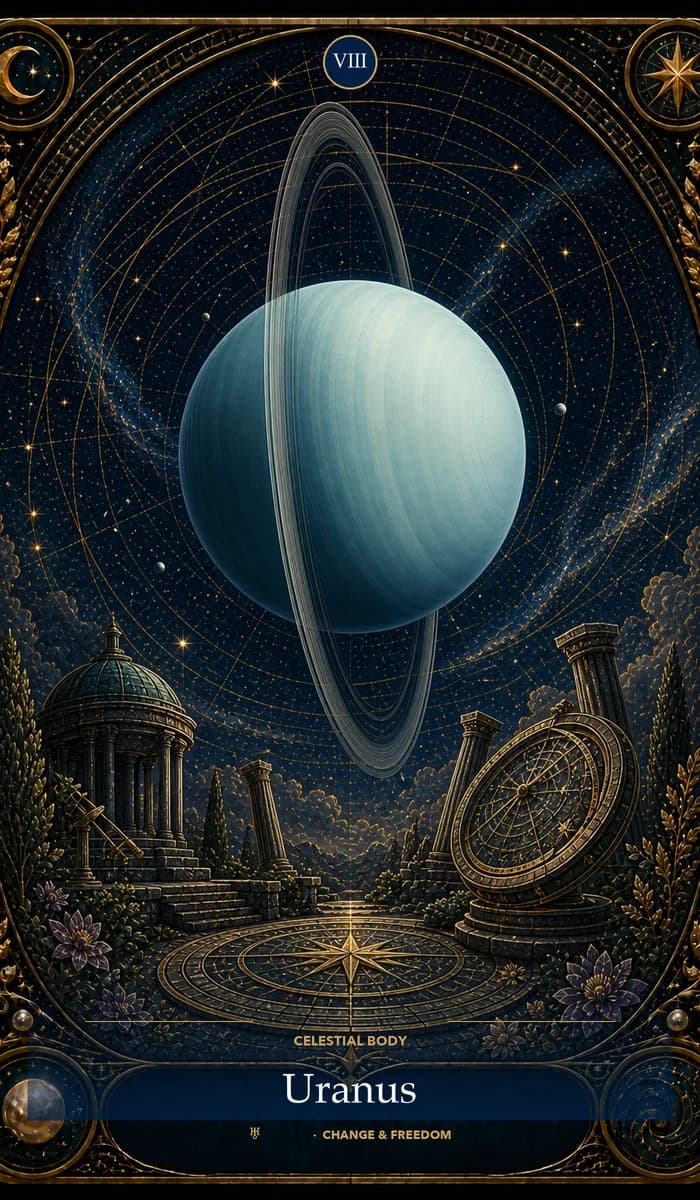
Uranus
Where you break the pattern.
your rebellion: where you break patterns and need freedom.
About seven years in each sign. Its sign is largely generational; astrologers usually treat it as more personally distinctive through its house, angularity and tight aspects to faster-moving planets.
Explore Uranus →
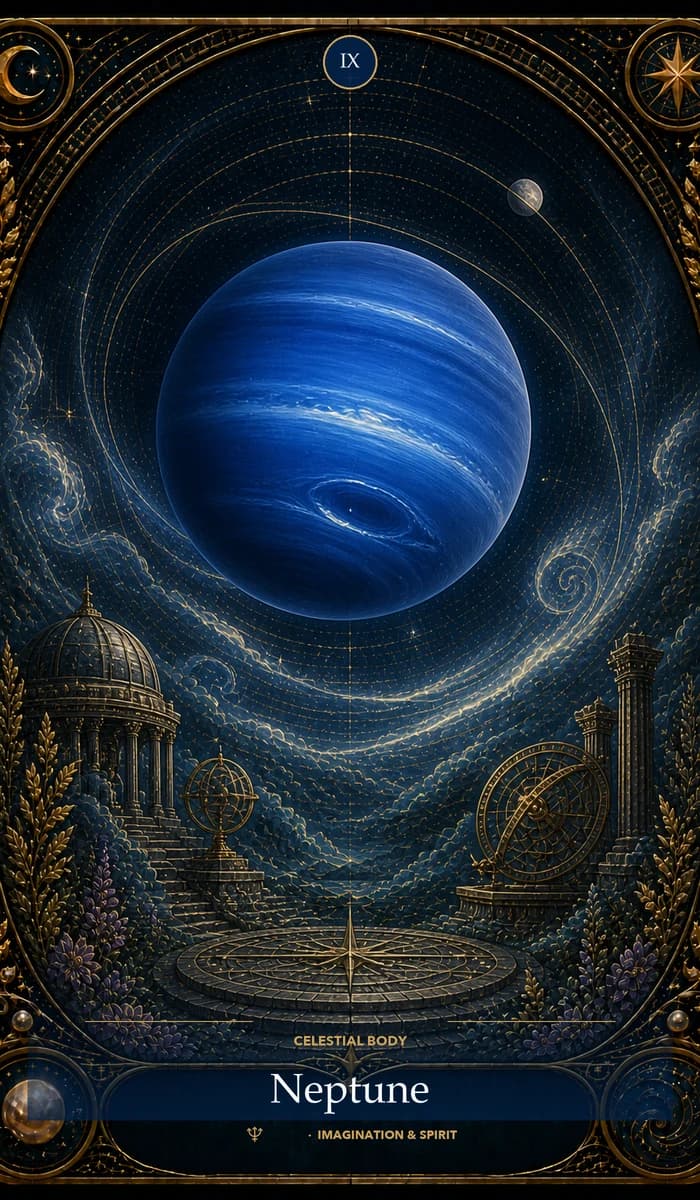
Neptune
Where the edges blur.
your dreams: imagination, longing, and where edges blur.
Around fourteen years in each sign. Its sign is generational; house, angularity and tight aspects to faster-moving planets are what astrologers read as personal.
Explore Neptune →
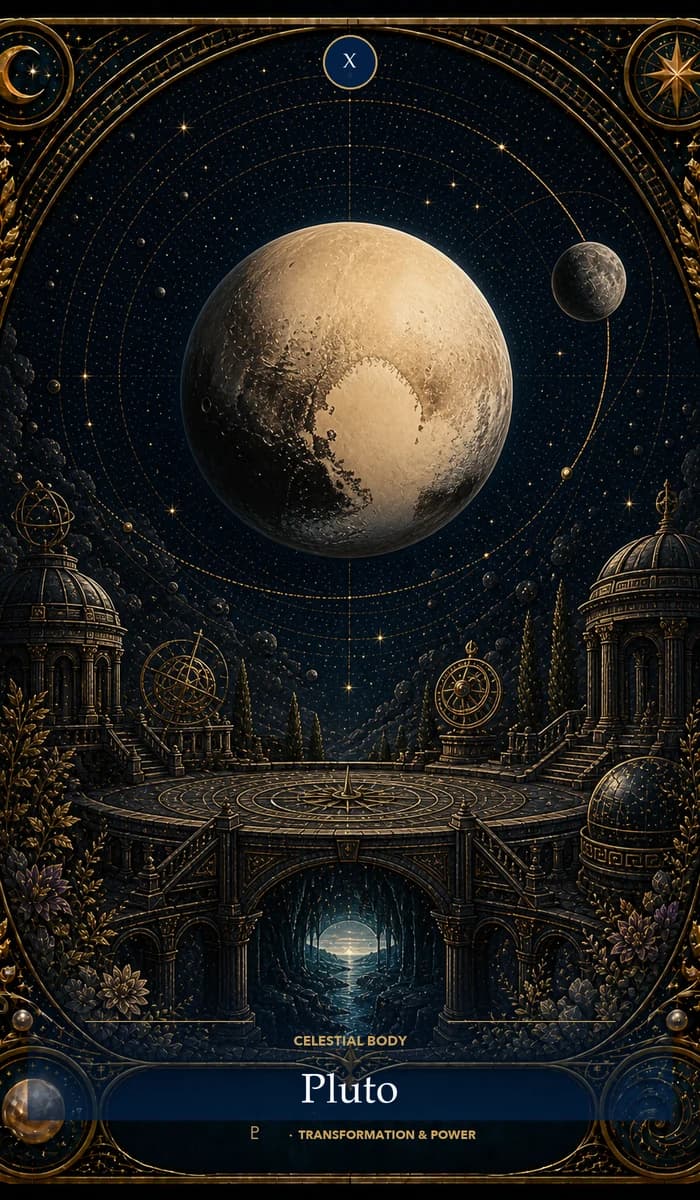
Pluto
What refuses to stay buried.
your depths: power, transformation, what refuses to stay buried.
Twelve to thirty years in each sign, depending where it is in that eccentric orbit. Its sign is generational; house, angularity and tight aspects are what astrologers read as personal.
Explore Pluto →
Where are they in your chart?
Its zodiac position comes from the body's calculated astronomical longitude. Its house is derived from your local birth horizon using AsterNym's declared Whole Sign house system.
The astronomy behind them
The same bodies as objects, not archetypes: what they are, and how we know.
- Asteroid impact risk: what's being tracked
Nothing catalogued threatens Earth right now, and the 2024 YR4 story shows the system working.
4 min read
- Jupiter's moons: what Galileo saw
Four points of light that broke the geocentric universe. You can see them in binoculars tonight.
4 min read
- The Kuiper Belt and Oort Cloud
One is observed. One is inferred. Pluto lives in the first, and comets come from both.
4 min read
- Mars in real life vs Mars in astrology
One object, two completely different descriptions. The gap between them is the subject.
4 min read
- Europa, Enceladus and the search for subsurface oceans
Icy moons with liquid oceans under the shell, kept warm by gravity, not sunlight. Enceladus is spraying its into space.
4 min read
- Why Pluto isn't a planet (the actual argument)
It wasn't demoted for being small. It was demoted because of what else turned up.
5 min read
- Saturn's rings are disappearing | sort of
Two different disappearances, about a hundred million years apart. Neither affects your evening.
4 min read
- Why Uranus is tipped over
An axial tilt of 98 degrees. It rolls around the Sun instead of spinning upright.
4 min read
- Venus: Earth's hellish twin
Almost Earth's size, and 465°C at the surface. Something went badly wrong, and it's a warning.
4 min read