
Major vs Minor Arcana: the structure of the deck
Seventy-eight cards. Two halves. Learn the shape and the deck stops being scary.
4 min read · Published 17 August 2026
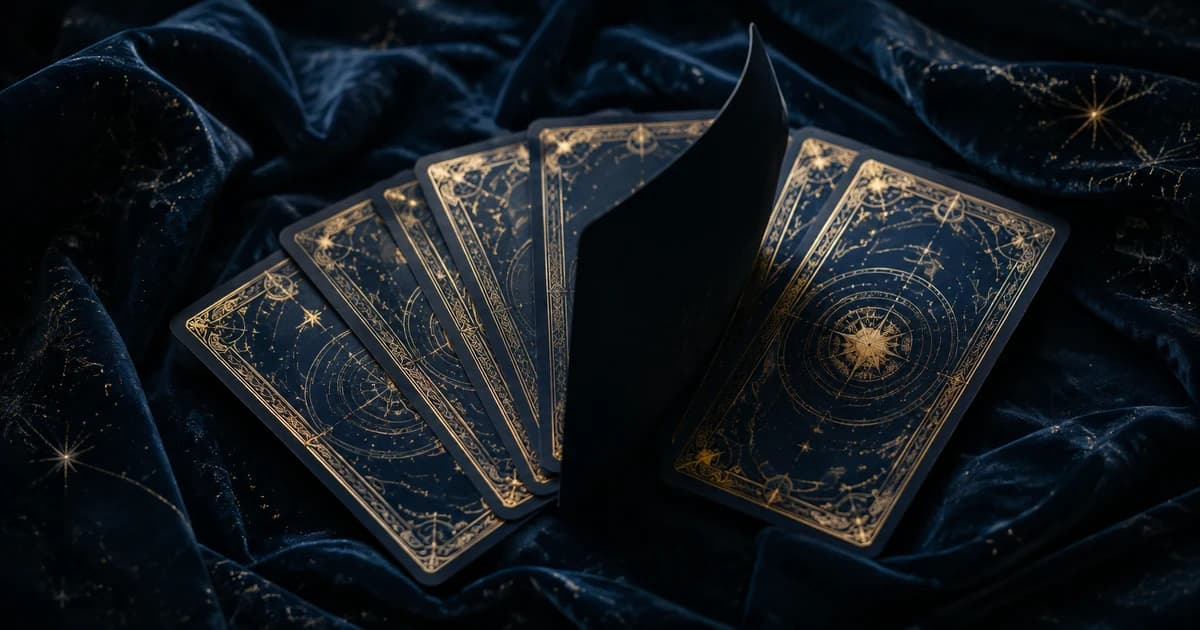
A tarot deck has 78 cards. The 22 Major Arcana are the numbered trumps, The Fool to The World. Readers treat them as big themes and turning points. The 56 Minor Arcana are four suits of fourteen: Wands, Cups, Swords, Pentacles. Ace to Ten, then four court cards. Those are ordinary life. Situations, feelings, people. That split is the whole structure, and it makes the deck learnable.
The two halves at a glance
| Major Arcana | Minor Arcana | |
|---|---|---|
| Count | 22 | 56 |
| Structure | Numbered 0 to 21, no suits | Four suits of 14 |
| Traditionally read as | Themes, turning points, forces acting on you | Daily situations, feelings, practical matters |
| In a spread | Weight. Golden Dawn writers read Several Majors as a significant period | Texture. The specifics of how something is playing out |
That last row is the practical difference. A reading full of Minor Arcana is usually read as ordinary life proceeding; Rider-Waite readers read a reading dominated by Majors as something structural happening. Whether that is meaningful is a separate question, but it's what most readers say, and it's why the split exists.
The Major Arcana
Twenty-two cards, numbered 0 to 21. The Fool is 0. It sits outside the sequence on purpose. The World is 21.
No suits, no repeats. Each card holds one big idea. The Tower is collapse. The Star is what comes after. Death is an ending that isn't literal. Read in order, they tell a story, which I cover in the Fool's journey.
The Majors carry most of tarot's symbolic weight. They also carry most of its baggage. Death gets its own post for exactly that reason: what the Death card really means.
Learn the Minors first. The Majors get the mystique. The Minors are where a reading about your actual week lives.
The Minor Arcana and its four suits
| Suit | Element | Domain | Playing-card equivalent |
|---|---|---|---|
| Wands | Fire | Drive, creativity, action, enterprise | Clubs |
| Cups | Water | Emotion, relationship, intuition | Hearts |
| Swords | Air | Thought, conflict, communication, truth | Spades |
| Pentacles | Earth | Money, work, body, material security | Diamonds |
Each suit runs Ace to Ten, then four court cards: Page, Knight, Queen, King in the Rider-Waite tradition. That is 14 per suit, 56 in total.
The elemental assignments will look familiar if you have read any astrology: the same four elements, doing roughly the same work. That overlap isn't a coincidence. Both systems were shaped by the same European esoteric revival in the nineteenth century, which is where a great deal of the correspondence between tarot and astrology was invented instead of inherited.
How the numbers work
A rough numeric spine that holds across all four suits
- Ace: the pure beginning of the suit, potential not yet spent.
- Two to Four: early development: choice, expansion, the first stable form.
- Five, the difficulty of the suit. Fives are the friction cards in every suit.
- Six to Eight: working through it: recovery, assessment, movement.
- Nine: the suit at its most intense, for better or worse.
- Ten: completion, and the burden that comes with it.
This is valuable for learning. Instead of memorise 56 cards, you learn four suits and one numeric spine, then combine. The Five of Cups is emotional difficulty; the Five of Pentacles is material difficulty. The system does most of the work.
Where AsterNym fits
AsterNym doesn't shuffle. It calculates a tarot birth card from your birth date with a single-card method adapted from modern tarot-numerology practice popularised by writers including Mary K. Greer: add month, day and year as whole numbers, then add the digits of the total until it is 22 or below. That produces a Major Arcana card that stays the same for life. Greer's fuller system reads linked Personality, Soul and constellation cards; AsterNym shows one primary card and the chain beneath it.
That's a different object from a drawn card, and to keep distinct. A drawn card is chance plus interpretation; a birth card is arithmetic plus interpretation. Neither predicts anything, but only one of them is reproducible, and we would rather be clear about which we're offering. Yours is on your tarot page.
How many cards are in a tarot deck?
Seventy-eight: 22 Major Arcana numbered 0 to 21, and 56 Minor Arcana made up of four suits of fourteen cards each: Ace through Ten plus four court cards.
What is the difference between Major and Minor Arcana?
The Major Arcana are 22 unsuited trump cards read as large themes and turning points. The Minor Arcana are 56 suited cards read as everyday situations, feelings and practical matters. A spread heavy in Majors is traditionally read as a more significant period.
What do the four tarot suits mean?
Wands are Fire, drive, creativity and action. Cups are Water, emotion and relationship. Swords are Air, thought, conflict and communication. Pentacles are Earth, money, work and material security.
Do I need to memorise all 78 cards?
Not separately. The Minor Arcana follows a numeric spine that holds across all four suits (Aces are beginnings, Fives are difficulty, Tens are completion) so learning four suits and one number sequence covers 40 of the 56 cards.
 Natalie Hasselbank