

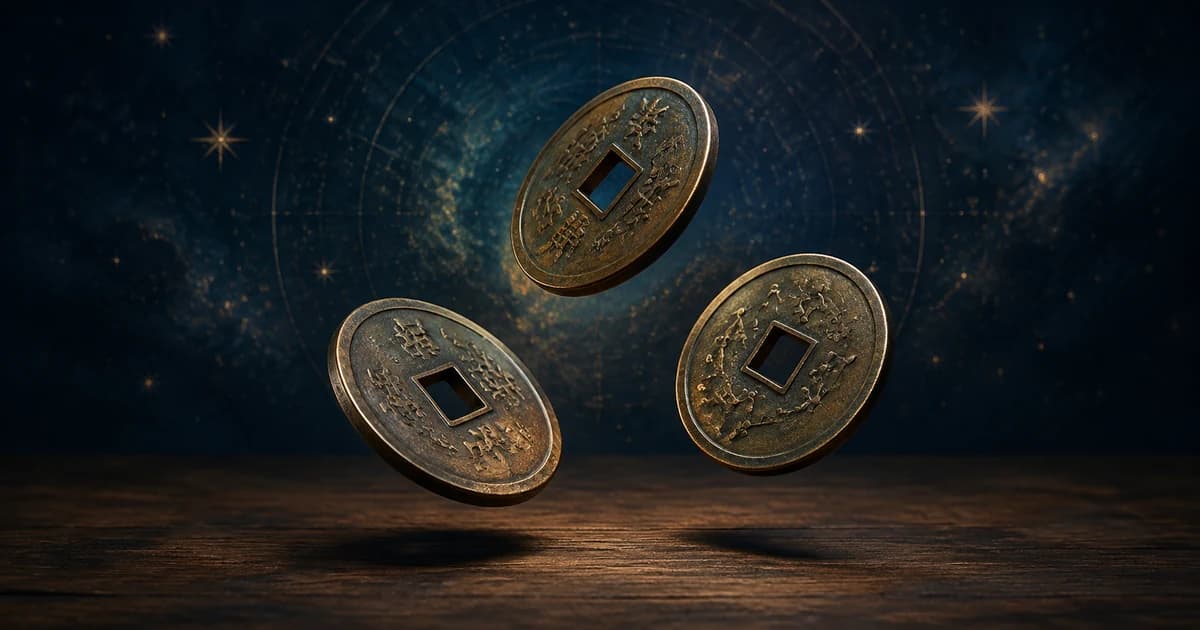
What is an anting-anting? The Filipino talisman in brass
The brass disc itself: its triangle and eye, its almost-Latin lettering, and the rules its keepers live by.
7 min read · Published 10 September 2026
In one paragraph
An anting-anting is a Filipino talisman, most often a small cast-brass disc or medallion, worn on the body or kept close, believed to give its keeper protection, courage or luck. It belongs to the wider amulet tradition Filipinos also call agimat, but the word usually points at the object itself: a dense little surface of Catholic imagery (a triangle, an all-seeing eye, a sacred heart), Latin and almost-Latin lettering, and abbreviated prayers called oraciones. In the tradition the brass is not the power; the words on it are, kept alive by prayer, conduct and proper care.
One object, two words
In everyday Tagalog, anting-anting and agimat name the same thing, and most speakers swap them freely. Where a shade of difference is felt, agimat leans toward the amulet tradition as a whole (the thing sought out or inherited for what it can do) and anting-anting toward the object itself, the talisman bound to its keeper.
This article stays with the object: what the classic brass piece looks like, how its surface is read, and how one is kept. The tradition around it, Holy Week at Mount Banahaw, the claims of invulnerability, the amulets of the revolution, is told in the agimat article.
A small brass thing made to be read
The classic anting-anting is a cast piece of brass, usually round, from coin-sized to palm-sized, often with a loop for a cord so it can rest on the chest or hang at the waist. Others are carried loose in a pocket, sewn into clothing, folded into a wallet, or kept on the family altar in a cloth wrap.
What separates it from an ornament is that the surface is meant to be read. The relief is dense rather than decorative: figures, borders and rows of lettering packed in as if the disc had to hold as much protection as its face could carry. The metal is not treated as sufficient by itself. It is the combination of form, inscription and the keeper's own practice that the tradition counts.
The triangle, the eye, the heart
A few signs recur so often they amount to the object's alphabet. The triangle stands for the Trinity. The all-seeing eye, set inside the triangle or above a scene, is divine watchfulness, the same image Catholic art uses for the eye of God. The sacred heart appears flaming, wounded or radiant, tying the disc to the devotion to Christ's love and suffering. Around these come crosses, stars, sunbursts, Marian monograms and saints.
The imagery is borrowed from European devotional prints and medals, and the borrowing is the point: the anting-anting speaks the Church's visual language. What makes it Filipino is the selection and the density, and the conviction that the arrangement itself does work.
Oraciones: the words are the power
Most discs carry oraciones: prayers, invocations and formulae, appearing in full, in fragments, or compressed to strings of initials. The wording draws on Church Latin and Spanish, holy names, and echoes of psalms and liturgy. Some lines read cleanly; many do not, and the almost-Latin is not a mistake to be corrected. Abbreviation, repetition and stylised script work as sacred sound and concealed prayer, meant to be recognised by the tradition rather than parsed by a grammarian.
The recurring key is the phrase Infinito Dios, Infinite God, the name at the centre of the Filipino esoteric current that produced the discs. It holds that the true names of God and the words of power were passed down outside the Church's control, in small printed booklets of oraciones, and the lettering on the brass abbreviates those words. A keeper who knows the booklet knows what the letters stand for; a scholar can reconstruct them; the disc works, in the tradition's own terms, either way, because it was made by someone who could read it.
A disc with nobody left to read it is jewellery, and the tradition itself says so.
How one is awakened and kept
In traditional accounts an anting-anting is not simply bought; it is prepared and maintained. Activation may involve reciting the oración over it, candles, incense, holy water or oil, and repetition at the times the keeper's lineage prescribes. Accounts vary by family, town and devotional line, and the constant is the idea that the object must be awakened and then sustained by discipline.
The keeping rules matter as much as the awakening. A disc is kept clean and stored respectfully, often wrapped, and not handled casually by others. Many traditions tie its efficacy to the keeper's conduct, warning that theft, deceit or pride will empty it. Read that way, the talisman is also an ethical instrument: a small object that keeps asking its keeper to be worth it.
Where the discs are now
Brass survives, which is why the anting-anting is so visible in Philippine material culture. Old pieces sit in museum and university collections and turn up in antique markets, displayed alongside santos and folk metalwork as records of how imported Catholic imagery was recast, literally, into local protective practice. For a curator the disc is evidence; for a devotee the same disc may still be a working object, which is worth remembering in front of the case.
New ones are still made. Stalls near Quiapo Church in Manila sell cast anting-anting beside candles and rosaries, makers reproduce the traditional motifs for devotees and collectors, and the forms have migrated into jewellery, tattoo design and heritage fashion. In film, komiks and television the anting-anting remains instant shorthand for hidden power.
Is an anting-anting the same as an agimat?
In everyday speech, yes: the two words are used almost interchangeably for a Filipino amulet. Where a difference is felt, agimat names the amulet tradition broadly and anting-anting the talisman object itself, most typically the cast-brass medallion.
What is an anting-anting made of?
The classic form is cast brass or a similar copper alloy, valued for holding fine relief and surviving generations of handling. Stones, folded paper oraciones and other objects also serve, and in the tradition the material matters less than the words and the keeping.
What do the symbols on an anting-anting mean?
The triangle stands for the Trinity, the all-seeing eye for divine watchfulness, and the sacred heart for the devotion to Christ's love, joined by crosses, stars, saints and Marian monograms. The imagery is borrowed from Catholic devotional art and arranged as a protective composition.
What is written on an anting-anting?
Oraciones: prayers and formulae in Church Latin, Spanish and stylised almost-Latin, often compressed to strings of initials. In the Infinito Dios tradition the letters abbreviate words of power passed down in printed booklets, so the inscription is a concealed prayer rather than broken text.
How is an anting-anting activated?
Accounts vary by family and lineage, but commonly involve reciting the disc's oración over it, with candles, incense, holy water or oil, repeated at prescribed times. The shared idea is that the object is awakened by practice and sustained by the keeper's discipline and conduct.
Can an anting-anting lose its power?
In many tellings, yes. Traditions warn that casual handling by strangers, disrespectful storage, or the keeper's own misconduct, such as theft, deceit or pride, can empty the object, and some hold that a talisman weakens when it changes hands.
Is the anting-anting approved by the Catholic Church?
No. It is folk Catholicism: it speaks the Church's visual and liturgical language, but the Church has never endorsed amulets or the esoteric tradition behind the oraciones. The two coexist in practice, with many keepers attending Mass and keeping a disc without felt contradiction.
Where can I see or buy an anting-anting?
Old pieces appear in Philippine museum and university collections and in antique markets; new ones are sold at stalls near Quiapo Church in Manila and by makers serving devotees and collectors. A vendor who can explain the oración is offering more than one who cannot.
Do people still wear anting-anting today?
Yes. They are still made, worn, inherited and brought for blessing, and the form has spread into jewellery, tattoos and heritage fashion. For many Filipinos the talisman is now a thread to family and folk-Catholic heritage as much as a claim of protection.
 Salimah Ibrahim