The long read
Albert Einstein's birth chart: the boy with the compass
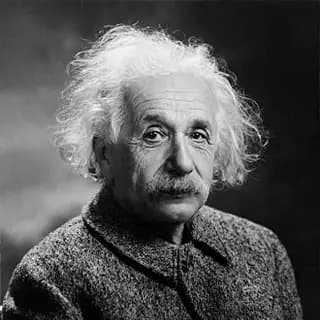
Albert Einstein was slow to talk, bad at sitting still in class, and turned out to be one of the great minds of all time. This is his life story told alongside his birth chart. We go step by step, and every star word is explained as we go.
By Mira Hale · 11 min read · Updated
A compass in a sick bed
Picture a little boy in Munich, sick in bed. He is five years old. He is bored. His father comes in and hands him a small gift. It is a compass.
The boy turns it this way and that. The needle keeps swinging back to point the same way. Nobody is pushing it. Nothing is touching it. So what moves it?
That boy was Albert Einstein. Years later he said the compass taught him that "something deeply hidden had to be behind things." He spent the rest of his life looking for those hidden things. Along the way he changed how we think about light, time and space.
Let's follow his life, and look at his birth chart as we go. Don't worry if you have never seen one.
What a birth chart is, and his Sun in Pisces
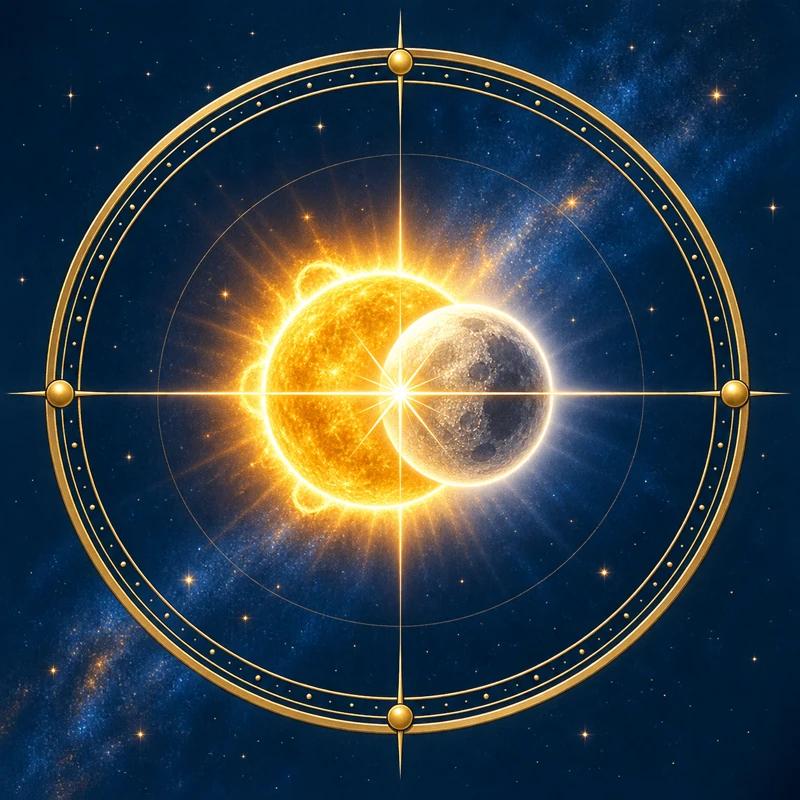
A birth chart is a map of the sky at the moment a person was born. It shows where the Sun, the Moon and the planets were, seen from the place of birth. Astrologers study that map and say it hints at a person's nature.
Einstein was born in the town of Ulm, in Germany, on 14 March 1879. The time was 11:30 in the morning. We can be fairly sure of that time, because it comes from his birth record.
Your Sun sign is the one most people know. It is the star sign the Sun was passing through on your birthday. Einstein's Sun was in Pisces, the sign of the two fish.
Western astrologers say Pisces is a dreamy sign. Pisces people are said to feel their way to answers. They picture things before they can prove them. That fits Einstein well. He liked to work with what he called thought experiments. He would close his eyes and imagine riding next to a beam of light. What would he see?
A chart is also cut into twelve slices called houses. Each house stands for a part of life. Einstein's Sun sat in the ninth house. Astrologers give that house to long trips, big questions and places of learning. He would spend his life in universities and crossing seas to give talks. So the ninth house is a neat fit.
The boy who was slow to talk
When Albert was very small, his parents were worried. He was slow to learn to talk. They wondered if something was wrong.
Here the chart has a fun detail. Planets can sit close together in a chart. When two are very close, astrologers call it a conjunction, which means they are joined. In Einstein's chart, Mercury and Saturn are joined, only one degree apart. That is about as close as it gets.
Mercury is the planet of thinking and talking. Saturn is the planet of slow, careful work and of limits. Astrologers say Mercury joined to Saturn can mean a mind that starts slowly but goes very deep. It wants every word right before it speaks.
I think this pairing tells you more about Einstein than any other part of his chart.
He did not stay slow for long. At twelve he taught himself algebra and geometry. Before he was thirteen he found his own proof of a famous rule about triangles.
But school was hard. His school in Munich made pupils learn by heart and repeat. He hated that. He later said it was bad for new ideas. At fifteen he left and joined his family in Italy.
At sixteen he sat the entry exam for a top college in Zurich. He failed the general part. Yet he did very well in maths and physics. So he spent a year at a school in the Swiss town of Aarau, then got in.
His Moon, and his violin
Your Moon sign is the sign the Moon was in when you were born. Astrologers say it shows your feelings and what makes you feel at home inside.
Einstein's Moon was in Sagittarius. That is the sign of the archer. Astrologers call it a sign of freedom, travel and big ideas. A Sagittarius Moon is said to need room to roam, in the world and in the mind. You can see that in a boy who could not stand being told to sit and repeat.
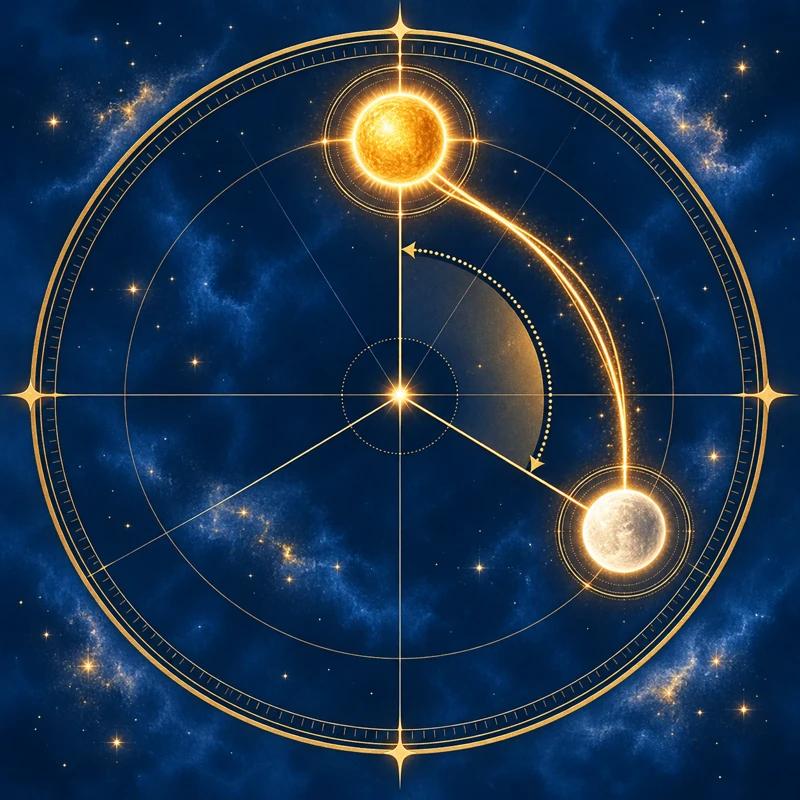
His Moon also makes a friendly angle to Venus. Astrologers call this angle a trine. It is a third of a circle apart, and it is said to let two planets help each other. Venus is the planet of love, beauty and music.
Music was a big part of his life. He began the violin at five, and at first he did not like it. Then at thirteen he found Mozart's violin music, and he fell in love with it. He said that "love is a better teacher than a sense of duty." He played all his life.
A desk job and a miracle year
Einstein finished college in 1900. Then came a sad stretch. For almost two years he tried to get a job as a teacher. No school wanted him.
At last a friend's father helped him get a job at the patent office in Bern, in Switzerland. A patent is a paper that says an idea for a machine belongs to you. His job was to check new ideas sent in by inventors. One was a machine to sort gravel. Another was an electric typewriter.
It was not his dream job. But it gave him time to think. In 1905, when he was 26, he did something amazing. He wrote four papers in one year. One explained how light can knock tiny bits off metal. One showed that tiny specks in water jiggle because they are hit by atoms. One was his special theory of relativity. It said that time can run at different speeds for people moving at different speeds.
The fourth gave us the most famous sum in the world: E = mc². In plain words, it says a tiny bit of matter holds a huge amount of energy.
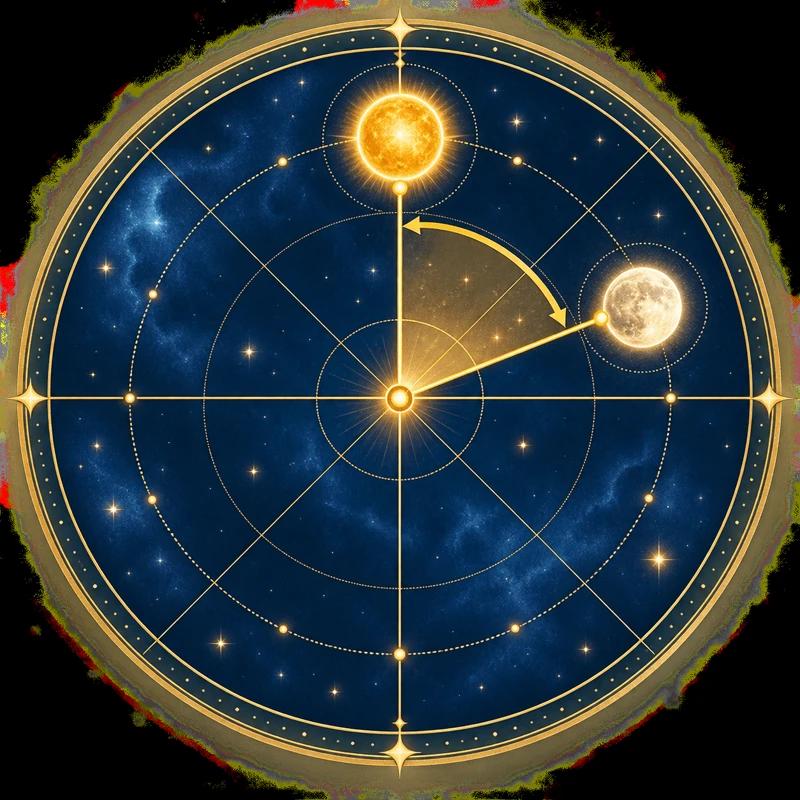
His chart has one more link to this. His Sun makes a sextile to Pluto. A sextile is a friendly angle, a sixth of a circle. Pluto is the planet astrologers give to hidden power and to what lies deep under the surface. A Sun that gets along with Pluto is said to be good at digging down to the bottom of things. That sounds a lot like the boy with the compass.
Famous overnight
In 1915 he finished a bigger idea, called general relativity. It said that heavy things, like the Sun, bend space around them. Even light should bend as it passes the Sun.
Not everyone believed it. Then a team led by the British scientist Arthur Eddington watched an eclipse, when the Moon hides the Sun. They checked starlight passing the Sun. It did bend. Newspapers far and wide told the story. Einstein became what one writer called "perhaps the world's first celebrity scientist".
On 2 April 1921 he arrived in New York. The mayor himself came to greet him. Crowds wanted to see the man who had bent light. He gave talks for weeks and visited the White House.
In 1922 he was given the Nobel Prize in Physics for 1921. The prize was not for relativity. It was for his work on how light knocks bits off metal. He missed the prize party in Sweden because he was away on a long trip in Asia.
A crab without a shell
Your rising sign is the sign that was coming up over the eastern horizon at the moment you were born. Astrologers say it is like your front door. It is the first thing people see.
Einstein had Cancer rising. Cancer is the crab. Astrologers say Cancer rising can look shy or guarded at first, like a crab in its shell. Inside, it cares a great deal about home and about keeping people safe.
Home became a big question for him. In 1933 the Nazis took power in Germany. Einstein was Jewish, and he was on a visit to the United States at the time. He knew he could not go back. He had lost his home.
Yet he spent that hard time helping others find safety. He wrote to the leader of Turkey and asked him to take in Jewish scientists who had lost their jobs. Turkey went on to take in more than a thousand Jewish refugees, scientists and their families among them. That is the crab's caring side at work.
On 3 October 1933 he gave a speech in London's Royal Albert Hall. He spoke about the freedom to learn and think. The crowd cheered him all the way through. Four days later he went back to America for good. He took a job at a new research centre in Princeton, New Jersey, and stayed there for the rest of his life.
He became an American citizen in 1940. He also spoke out against racism. He called it America's "worst disease" and said, "I do not intend to be quiet about it."
His Chinese chart and his life number
Chinese astrologers use a different system. They give each year an animal. Einstein was born in the year of the Earth Rabbit. Chinese astrologers say Rabbit people are gentle, quiet and clever, and that they dislike fights. Einstein called himself a pacifist, which is a person who is against war.
Chinese astrologers also look at the day you were born. They call it your Day Master, and it is one of five elements. Einstein's Day Master is yang Fire. Yang Fire is said to be like the Sun in the sky. It shines on everyone and is hard to hide.
Numerology is a way of finding meaning in numbers. To get your Life Path number, you add up the digits of your birth date until one digit is left. For Einstein that number is 6. Numerologists say 6 is the number of care and doing right by others. His fight against racism and his help for scientists in danger both fit a 6.
What the slow planets were doing
The planets far from the Sun move very slowly across the sky. Jupiter, Saturn, Uranus, Neptune and Pluto can take years to cross one sign. Astrologers watch where these slow planets are compared with the planets in your birth chart. They call this a transit.
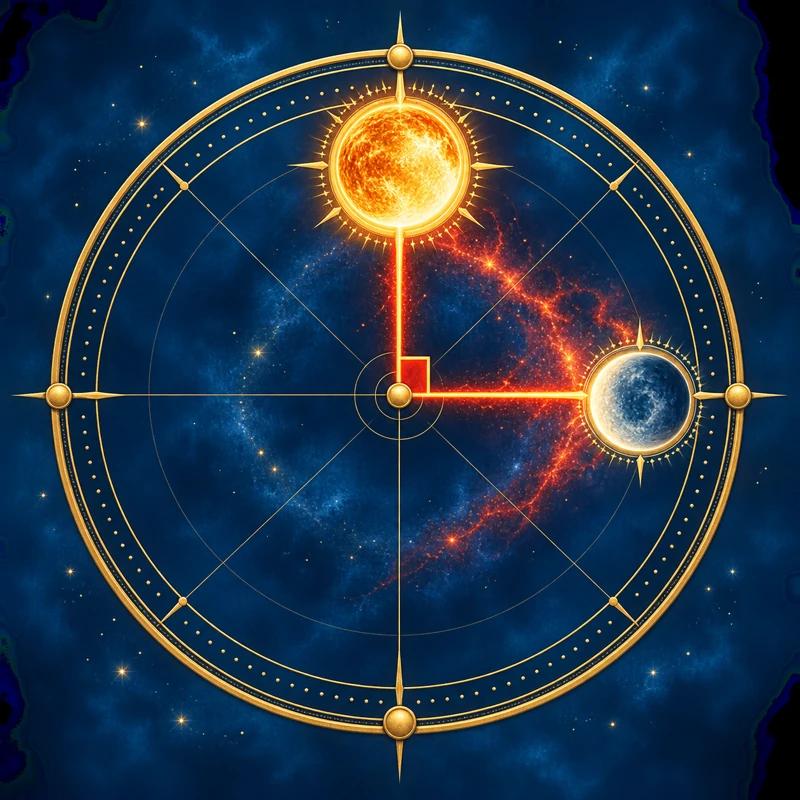
When Einstein sent off his relativity paper in 1905, Pluto was making a square to his Sun. A square is a quarter of a circle, and astrologers say it brings pressure and big change. A paper that changed physics fits that well.
In 1911 he joined the top scientists of the day at a meeting in Brussels. Neptune, the planet of dreams, was making a trine to his Sun, almost exact.
When he reached New York in 1921, Jupiter was making a sextile to his rising sign. Jupiter is the planet of luck and growth. A welcome from a whole city is about as lucky as a trip can get.
And in London in 1933, Pluto was making a trine to his Sun. Astrologers say this can bring deep change that you can still steer. He had lost his home, yet he was cheered and starting again. The table on this page shows the full sky for each date.
The end of his story, and the start of yours
In April 1955 Einstein became very ill. He was 76. Doctors offered an operation, but he said no. He said he had done his share. He died in hospital in Princeton early on 18 April 1955. He had kept working almost to the end, and he had a speech he was still writing at his side.
Here is something you can try. Find your own birth date, time and place. Then look up three things: your Sun sign, your Moon sign and your rising sign. Ask yourself one question about each. Does it fit something you have done, the way Einstein's Mercury fit a boy who was slow to talk?
Then go and find your own compass. It does not have to be a real one. It is the thing that makes you ask, "What is moving that?" For Einstein it lasted a whole life.
The sky at Albert’s turning points
Worked out for each date from the same ephemeris as the chart above. Only the slow planets are shown, and a contact counts when it is within 3°.
· age 26
His special relativity paper reaches the journal
Jupiter in Taurus, Saturn in Pisces, Uranus in Capricorn, Neptune in Cancer, Pluto in Gemini · Jupiter square to Albert’s Jupiter (1.4°); Pluto square to Albert’s Sun (1.9°); Uranus square to Albert’s Saturn (2.2°); Jupiter sextile to Albert’s Sun (2.6°)
Pluto in Gemini was making a square to his Sun, and Uranus in Capricorn was making a square to his Saturn. Astrologers tie squares to pressure and big change.
· age 32
He joins the first Solvay Conference in Brussels
Jupiter in Scorpio, Saturn in Taurus, Uranus in Capricorn, Neptune in Cancer, Pluto in Gemini · Neptune trine to Albert’s Sun (0.3°); Pluto trine to Albert’s Jupiter (1.4°); Uranus sextile to Albert’s Sun (2.1°); Jupiter trine to Albert’s Sun (2.5°)
Neptune in Cancer was making an almost exact trine to his Sun. Jupiter in Scorpio made a trine to his Sun as well. Astrologers would call this an easy, welcoming sky.
· age 42
He arrives in New York to a hero's welcome
Jupiter in Virgo, Saturn in Virgo, Uranus in Pisces, Neptune in Leo, Pluto in Cancer · Jupiter sextile to Albert’s Ascendant (1°); Jupiter opposite Albert’s Midheaven (2.2°); Pluto square to Albert’s Saturn (2.6°)
Jupiter in Virgo was making a sextile to his rising sign. Astrologers give Jupiter to luck and growth, and the sextile to open doors.
· age 54
His speech at the Royal Albert Hall in London
Jupiter in Libra, Saturn in Aquarius, Uranus in Aries, Neptune in Virgo, Pluto in Cancer · Neptune sextile to Albert’s Ascendant (0.6°); Jupiter opposite Albert’s Saturn (0.8°); Pluto trine to Albert’s Sun (1.1°); Uranus sextile to Albert’s Jupiter (1.4°); Neptune opposite Albert’s Midheaven (1.8°)
Pluto in Cancer was making a trine to his Sun, and Neptune in Virgo a sextile to his rising sign. Jupiter faced his Saturn from across the sky.
 1
 2
 3
 4
 5
 6
 7
 8
 9
 10
 11
 12