

The astrology of friendship breakups
The endings nobody gives you words for, and a chart is a poor substitute for the words.
2 min read · Published 31 August 2026
The answer
Friendship endings are often harder than romantic ones and get far less cultural language, which is part of why people bring them to astrology. A chart can describe how two people differ and where friction was structural rather than personal. It cannot tell you why someone left, whether they will return, or whether you were at fault.
Why this is harder than it looks
Romantic endings have a script: a word, a process, permission to grieve. Friendship endings have almost none, often no conversation and no stated reason. So the need people bring to astrology is usually for an account, a way of giving something shapeless a structure. That is a real need.
A chart won't tell you who was wrong. I'd rather it told you which differences were structural, and it can.
What a comparison can show
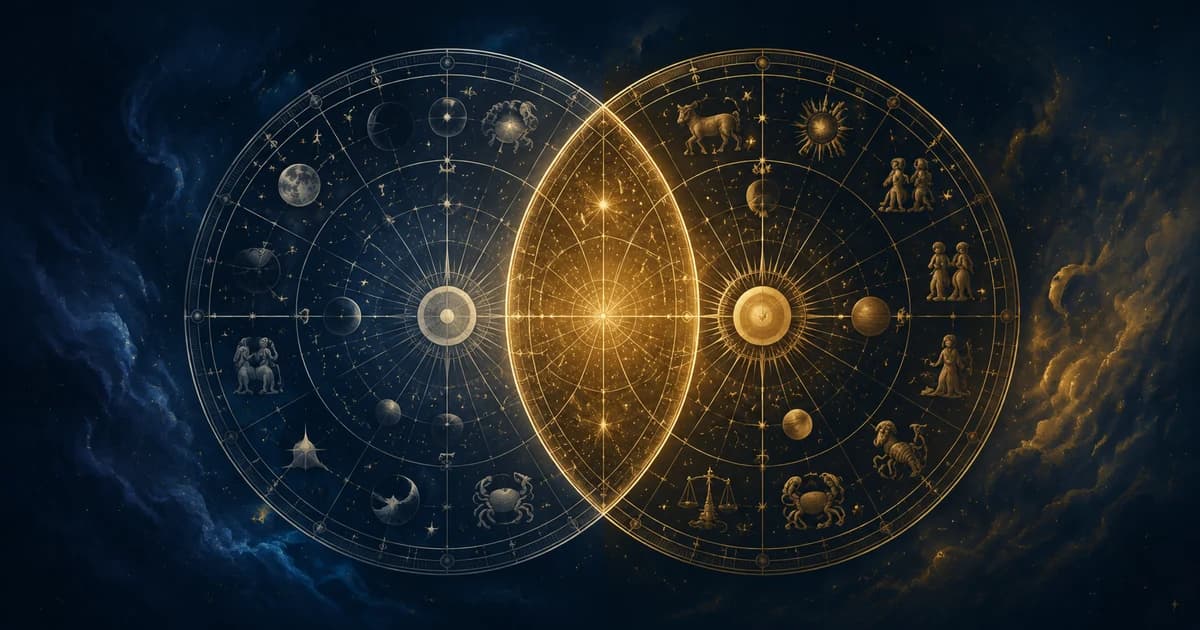
Structural difference, one strongly fixed chart against one mutable, describing two tolerances. Mercury placements that name recurring argument styles. Moon placements that name different security needs. Nothing about blame: no chart feature indicates fault, and any reading assigning it is inventing.
The trap
'Our charts were incompatible' is a complete account that asks nothing further of you. It is unfalsifiable, and it can stand in for a more uncomfortable reflection. The karmic version, a past-life connection that completed, is the most closed of all.
The more practical frame
Use your own chart, not theirs. Asking what your Moon needs, and whether you were getting it or asking for it, is a legitimate exercise. Reading someone else's chart to learn what they were thinking cannot work, and they never consented. AsterNym's match has a friendship lens and won't tell you why someone stopped replying.
The follow-ups
- Why are friendship breakups so hard?
- Because they have almost no cultural script: often no conversation, no stated reason and no acknowledgement that something significant ended, which many find more disorienting than a romantic break-up.
- Can astrology explain why a friendship ended?
- It can describe structural differences between two charts, which may give language for recurring friction. It cannot tell you why someone left or whether you were at fault.
- Does a chart show who was to blame?
- No. No chart feature indicates fault, and any reading that assigns blame is inventing. A framework that closes the question deserves suspicion.
 Xavier Brooks