
The long read
Pablo Picasso: the boy whose first word was pencil
Picasso painted for more than 76 years and changed the way the world draws a face. This is his life told from the start, with his birth chart laid out in plain words as we go. You do not need to know any astrology to follow it.
By Mira Hale · 11 min read · Updated
A baby who asked for a pencil
Most babies say mama or dada first. Pablo Picasso said "piz, piz". His mother said it was his way of saying lápiz. That is the Spanish word for pencil.
He was born in Málaga, a sunny city in the south of Spain, on 25 October 1881. His father, José, was a painter and an art teacher. José painted birds, mostly pigeons. When Pablo was seven, his father began to teach him. He made the boy copy old paintings and draw people from plaster statues. It was slow, strict work. Pablo loved it.
He loved it so much that school came second. He drew in the margins of everything. A story is told that one day, when he was about thirteen, his father found him painting over his own half-done pigeon. The boy's work was so good that José said he would give up painting. Nobody is sure that story is true. José did keep painting after that. But it tells you what people thought of the boy.
At 13 he sat the entrance test for an art school in Barcelona. Most students took a month to finish it. Pablo took a week, and they let him in.
What his birth chart shows
A birth chart is a map of the sky at the moment you were born. Astrologers look at where the Sun, the Moon and the planets were, and which star signs they sat in. We know Picasso's chart well, because his birth certificate gives the time. He was born at a quarter past eleven at night.
Your Sun sign is the one most people know. It is the sign the Sun was in on your birthday. Picasso's Sun was in Scorpio. Western astrologers say Scorpio is the sign of deep feelings, secrets and big changes. A Scorpio does not do things by halves.
Your Moon sign is the sign the Moon was in. Astrologers say it shows what you need to feel safe and happy inside. Picasso's Moon was in Sagittarius. That is the sign of travel, freedom and wide open roads.
Your rising sign is the sign that was coming up over the eastern horizon at the moment you were born. Astrologers say it is like the front door of your house. It is how people see you first. Picasso had Leo rising. Leo is the lion. It likes a stage, bright colours and an audience.
Put those three together and astrologers would expect a person with deep, private feelings who needs to roam and likes to be seen. Now watch how his life went.
Cold rooms and blue paint
At 16 Picasso went to Madrid to study at the best art school in Spain. He soon stopped going to class. He did not like being told what to do. He went to the Prado museum instead and stared at the old masters.
In 1900 he went to Paris, which was the art capital of the world. He had almost no money. He shared a tiny flat with a poet friend called Max Jacob. Max slept at night, and Picasso slept in the day and painted at night. The room was so cold that Picasso burned some of his own drawings to keep warm.
This is where his Sagittarius Moon shows up. For years he kept moving between Spain and France. He never stayed put for long. Back in Madrid in 1901, he and a friend started a magazine called Arte Joven, which means Young Art. Picasso drew the pictures. By then he had started to sign his work with his mother's surname, Picasso, instead of his father's name, Ruiz.
Then a close friend of his died. Picasso was crushed. For about three years he painted almost everything in blue. He painted thin, sad people, hungry mothers with children, and a blind man at a bare table. People now call this his Blue Period.
A Scorpio Sun, astrologers say, goes all the way down into a feeling before it comes back up. That is what Picasso did. Then, around 1904, he met a young woman called Fernande Olivier. The blue lifted. He started painting circus people and acrobats in pink and orange. That is his Rose Period.
The painting that made people angry
In 1907 Picasso painted five women in a room. It was called Les Demoiselles d'Avignon. Some of the faces looked like masks. The bodies were made of sharp, flat shapes. He had seen African masks in a Paris museum that summer, and they changed how he painted the faces.
When his friends saw it, most of them were shocked. Even Henri Matisse, the other big painter of the day, was cross. He called it a joke. Picasso kept it out of public shows for nine years.
But he did not stop. With his friend Georges Braque, he began breaking things into blocks and pieces. A guitar, a bottle and a face could all be shown from many sides at once. This new style was called Cubism. Later he even glued real paper and cloth onto his paintings. People often call this the first collage.
Here is a fun one. In 1911 the Mona Lisa was stolen from the Louvre, the big museum in Paris. The police took Picasso in for questions! He had once bought stolen things from the same man the police were looking at. In the end he and his friend were both cleared.
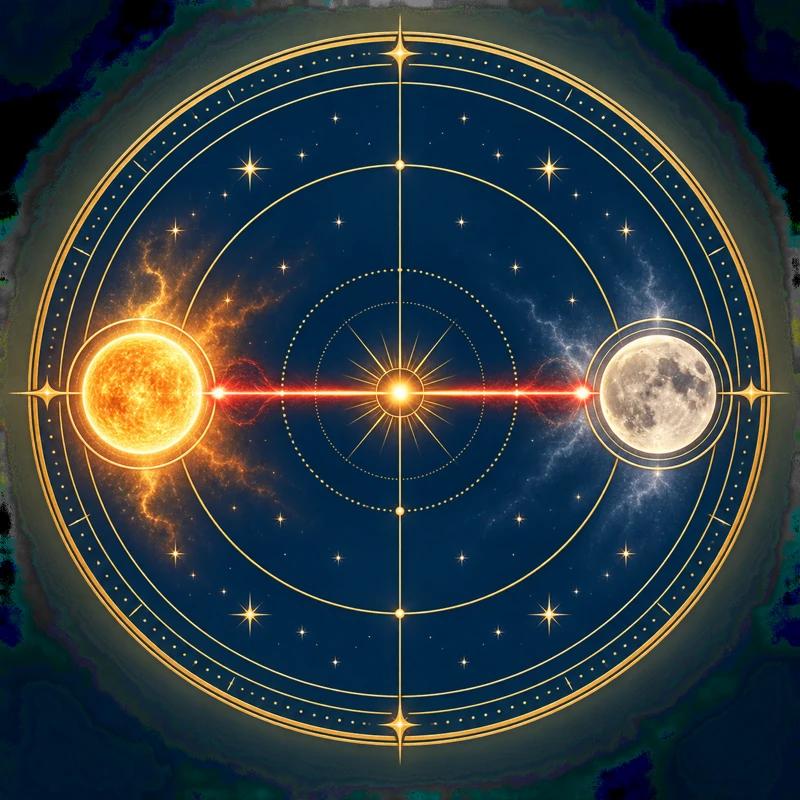
Astrologers would point to something in his chart here. Mercury is the planet of thinking and talking. Jupiter is the planet of more, bigger and wider. In Picasso's chart they sit on opposite sides of the sky. Astrologers call that an opposition. They say it gives a mind that keeps pulling towards the next huge idea. At his death there were more than 45,000 of his works in his estate. He also wrote more than 300 poems and some plays.
The hard part of the story
Picasso was famous, rich and very clever. He was also not kind to many of the women who loved him. This part of his life matters, so here it is plainly.
In 1918 he married a ballet dancer, Olga Khokhlova. They had a son, Paulo. Later, while still married, Picasso began a secret relationship with a much younger woman, Marie-Thérèse Walter. When their daughter Maya was born in 1935, he hid her and the baby in a flat across the street from his own home.
Later he lived with a young artist called Françoise Gilot, and they had two children, Claude and Paloma. In 1953 she left and took the children with her. Years later she wrote a book about it. She said he was cruel and had treated her badly. Picasso was so angry about the book that he cut off his children with her.
Several of the women in his life went on to have very sad lives. People still argue about how to feel about his art because of this. Both things are true at once. He was a great painter, and he hurt people.
Guernica, the painting against war
On 26 April 1937, during a war in Spain, German planes bombed a small Spanish town called Guernica. It was market day. Most of the people there were women and children. The town burned.
Picasso was in Paris. A few days later he read a report from someone who had been there. He threw away the painting he had been planning and started something new. It became one of the most famous pictures ever made.
Guernica is huge, almost eight metres wide. It has no bright colours at all, only black, white and grey. You see a screaming horse, a bull, crying women and fire. It does not show the planes. It shows what they did.
I think Guernica is the best place to start if you have never looked closely at a Picasso painting.
During the next big war, German soldiers took over Paris. Picasso stayed. One day an officer came to search his flat. He saw a photo of Guernica and asked, "Did you do that?" Picasso said, "No. You did."
Remember the Leo rising, the lion that wants a stage? Picasso used his fame as that stage. He sent Guernica around the world to raise money for people who had lost their homes in Spain. He also said it must not go to Spain until the country was free. It stayed in New York until 1981.
The Snake, the river and the number eight
Chinese astrology gives each year an animal and an element. Picasso was born in a Metal Snake year. Chinese astrologers say the Snake is watchful, clever and private. It waits, and then it moves fast. Metal makes it sharper and harder to bend.
Chinese astrologers also look at the day you were born. They call its element your Day Master. It stands for you yourself. Picasso's Day Master is yang Water. Yang Water is big water, like a river or the sea. It keeps moving and it is very hard to stop. His hour of birth is a Water hour too.
That fits a man who kept painting through two world wars and never stopped changing his style. On the last night of his life, at 91, he painted until three in the morning.
There is one more number. Your Life Path number comes from adding up every digit of your birthday until you get one number. For Picasso, 2, 5, 1, 0, 1, 8, 8 and 1 make 26. Then 2 and 6 make 8. People who use numbers this way say 8 is the number of power, money and big results.
Picasso became one of the richest artists who ever lived. But when the city of Chicago asked him to design a giant statue, he would not take the $100,000 fee. He gave it to the people of the city for free. It went up in 1967 and still stands there today.
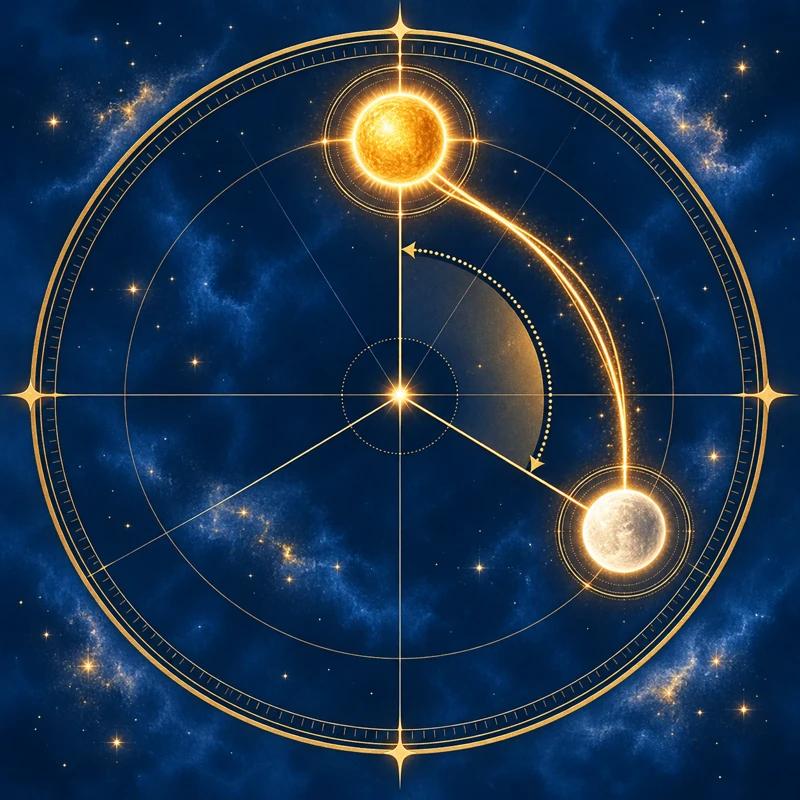
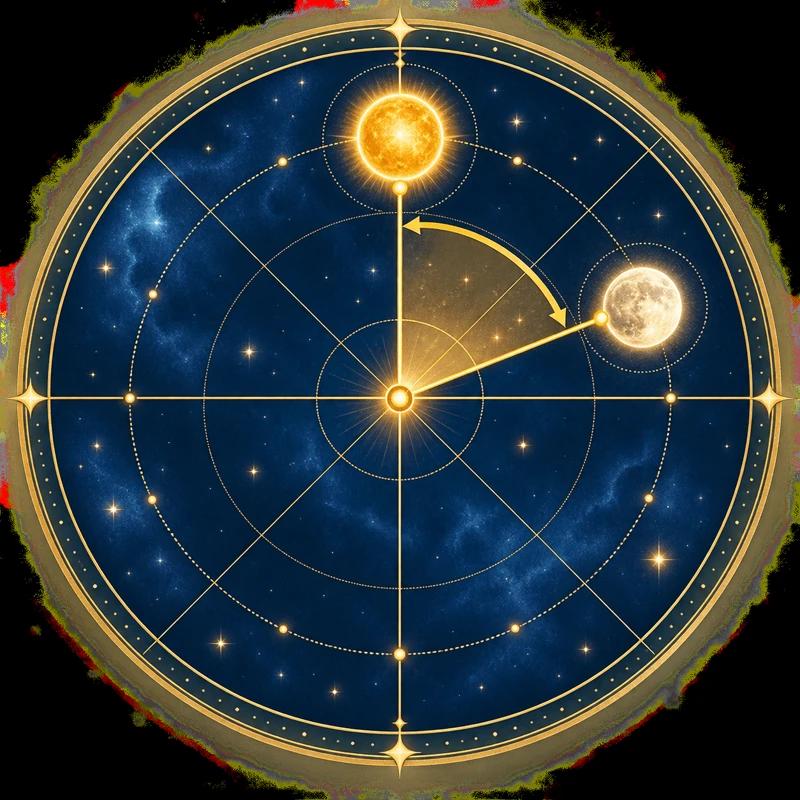
One more thing in his chart. Mars is the planet of energy and action. Saturn is the planet of hard work and time. In his chart they make a friendly angle that astrologers call a sextile. They say it gives a person energy that lasts, the kind that turns up every day.
What the slow planets were doing
Some planets take years to cross one sign. Jupiter, Saturn, Uranus, Neptune and Pluto move slowly. Astrologers watch where these slow planets travel and what spots in your birth chart they touch. They call these touches transits.
When Picasso started his magazine at 19, Jupiter and Saturn were both in Capricorn. Jupiter was making a friendly angle to his birth Saturn. Astrologers say that is a good time to build something that lasts.
When his son Paulo was born in 1921, Uranus, the planet of surprises, was making a friendly angle to his Sun. Saturn was making a friendly angle to his birth Jupiter, almost to the exact degree.
The day Guernica was bombed is the most striking one. Uranus was sitting right on top of the spot where Saturn was when he was born, within a tenth of a degree. Astrologers say Uranus shakes things up and Saturn stands for walls and rules. Picasso had never made a political painting before. That spring he made his most famous one.
When he drew his dove in 1949, Saturn was pressing on his birth Moon. Uranus was making a friendly angle to the top of his chart. The dove became a poster for peace that went all over the world.
How to read your own chart like this
Picasso died at home in Mougins, in the south of France, on 8 April 1973. He had made art for over 76 years. You can see his work in museums all over the world.
You can look at your own chart the same way we looked at his. Start with three things. Your Sun sign is the easy one. For your Moon sign and rising sign you need the time you were born, so ask someone who was there, or look at your birth certificate.
Then look for one thing you love doing, and see if your chart says something about it. Picasso's chart did not paint his pictures. He did that himself, every single day. But it gives you a fun new way to look at a life, his or your own.
The sky at Pablo’s turning points
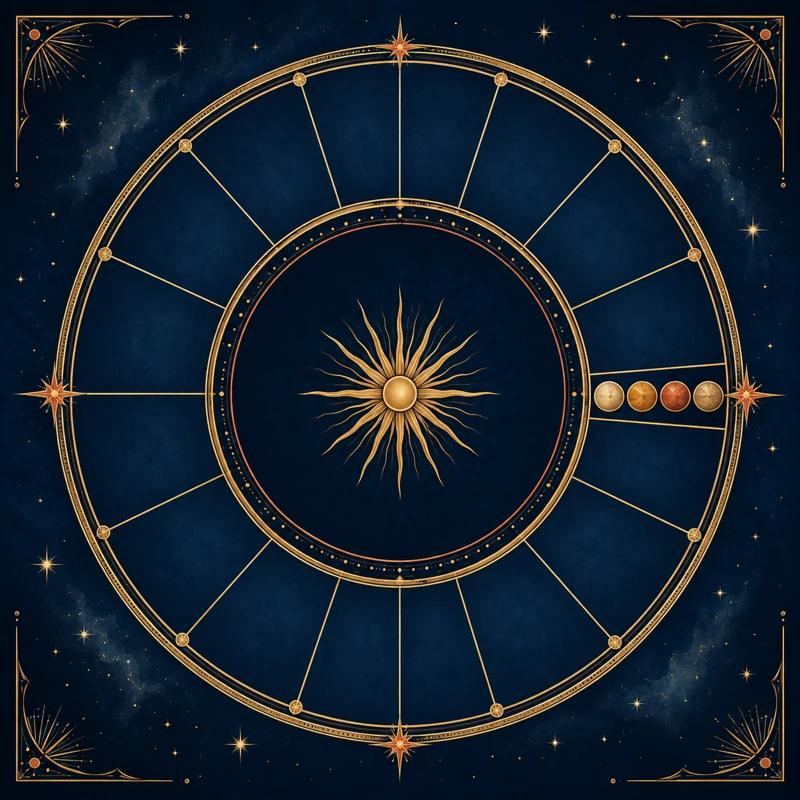
Worked out for each date from the same ephemeris as the chart above. Only the slow planets are shown, and a contact counts when it is within 3°.
· age 19
First issue of his magazine Arte Joven
Jupiter in Capricorn, Saturn in Capricorn, Uranus in Sagittarius, Neptune in Gemini, Pluto in Gemini · Neptune sextile to Pablo’s Midheaven (1.5°); Jupiter trine to Pablo’s Saturn (2.2°)
Jupiter and Saturn were both in Capricorn. Jupiter made a friendly trine to his birth Saturn, which astrologers call a good time to start something that lasts.
· age 39
His son Paulo is born
Jupiter in Virgo, Saturn in Virgo, Uranus in Pisces, Neptune in Leo, Pluto in Cancer · Saturn trine to Pablo’s Jupiter (0.4°); Uranus trine to Pablo’s Sun (1.8°); Pluto sextile to Pablo’s Saturn (2.3°); Neptune square to Pablo’s Saturn (2.8°)
Saturn in Virgo made a near-exact trine to his birth Jupiter, and Uranus in Pisces made a trine to his Sun. Astrologers would call that a calm, settled sky.
· age 55
German planes bomb Guernica
Jupiter in Capricorn, Saturn in Aries, Uranus in Taurus, Neptune in Virgo, Pluto in Cancer · Uranus on Pablo’s Saturn (0.1°); Pluto square to Pablo’s Midheaven (1.5°); Jupiter square to Pablo’s Midheaven (1.7°); Pluto sextile to Pablo’s Jupiter (3°)
Uranus in Taurus sat right on his birth Saturn, within a tenth of a degree, and Pluto squared the top of his chart. Astrologers say that is when old walls come down.
· age 67
He makes the lithograph Dove
Jupiter in Capricorn, Saturn in Virgo, Uranus in Gemini, Neptune in Libra, Pluto in Leo · Saturn square to Pablo’s Moon (2.5°); Uranus sextile to Pablo’s Midheaven (2.6°); Jupiter trine to Pablo’s Saturn (2.9°); Saturn sextile to Pablo’s Sun (3°)
Saturn in Virgo squared his birth Moon and Uranus in Gemini made a sextile to the top of his chart. The dove went on to become a poster for peace around the world.
 1
 2
 3
 4
 5
 6
 7
 8
 9
 10
 11
 12