The long read
Sylvia Plath's birth chart: a girl who wrote everything down
Sylvia Plath was a poet who started writing as a small girl and never stopped. This is her life, told in order, with her birth chart explained in plain words as we go. You do not need to know any astrology to follow it.
By Mira Hale · 11 min read · Updated
A poem in the paper at eight
Picture a girl of eight opening a Boston newspaper. She turns to the page for children. There, in print, is a poem. Her poem. Her name is under it.
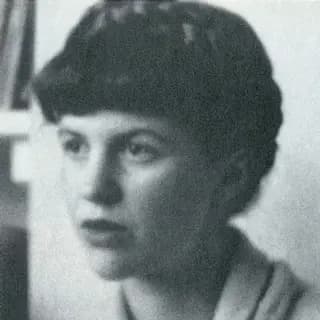
That girl was Sylvia Plath. She grew up to be one of the most famous poets of the last hundred years. But first she was a child in Massachusetts, with a notebook and a lot to say.
This is her story. Along the way we will look at the sky on the day she was born, and what astrologers say it shows.
A small house and a big loss
Sylvia was born on 27 October 1932 in Jamaica Plain, a part of Boston. Her father, Otto, was a professor who studied insects. Her mother was called Aurelia. When Sylvia was two, her little brother Warren was born.
In 1936 the family moved to Winthrop, a town near Boston. Her grandparents lived close by, at a spot called Point Shirley. Years later that place turned up in her poems.
Then, in November 1940, her father died. He had diabetes that had not been treated, and he became very sick. It was only about ten days after her eighth birthday.
A loss like that does not go away. It stayed with Sylvia for the rest of her life, and she wrote about her father again and again.
Her mother moved the family to a town called Wellesley. There, on the first day of 1944, Sylvia began to keep a diary. She was eleven. She would keep writing about her days, in diaries and journals, for most of her life.
The sky on the day she was born
A birth chart is a map of the sky at the exact moment and place a person was born. Western astrologers look at where the Sun, the Moon and the planets were standing on that map.
Your Sun sign is the one most people know. It is the sign the Sun was in on your birthday. Sylvia's Sun was in Scorpio. Astrologers say Scorpio is the sign of deep feelings. Scorpios want to dig down to the truth, even when the truth hurts. They do not like small talk.
That is a good picture of her poems. She did not write about pretty flowers to be polite. She wrote about anger, fear, love and grief, in words that hit hard.
Her Sun sat at the very top of her chart. Astrologers call that area the place of your public life and your work. A Sun up there, they say, wants to be seen for what it does. Sylvia wanted that badly. She wanted to be a great writer.
Your Moon sign is the sign the Moon was in when you were born. Astrologers say the Moon shows your feelings and what you need to feel safe. Sylvia's Moon was in Libra. Libra is the sign of the scales. It wants balance, beauty and a partner by its side.
So there is a pull inside her chart. The Scorpio Sun digs deep and does not care if it upsets anyone. The Libra Moon wants things to be fair and nice, and wants to be liked.
The sign on the edge
Your rising sign is the sign that was coming up over the eastern horizon at the moment you were born. Think of it as the front door of your house. It is the first thing other people see.
Sylvia's birth time, 2:10 in the afternoon, comes from her family. That gives her Aquarius rising. Aquarius is the sign of the clever outsider. Astrologers say Aquarius rising people seem bright, cool and a little apart from the crowd.
There is a catch, and it is a fun one. Her rising sign sits at the very last degree of Aquarius. If the clock was a few minutes off, she would have Pisces rising instead. Pisces is the dreamy sign of the fish. So her front door is right on the line between two signs.
Astrologers would say that fits a person who was very sharp and very dreamy at once. On the outside she was a bright, top student. Her poems show a much stranger, wilder world inside.
Top of the class, and very ill
In 1950 Sylvia went to Smith College, a big college for women. She worked very hard and got top marks. By then she had already written more than 50 short stories, and magazines had printed her work.
In the summer of 1953 she won a place as a guest editor at a magazine called Mademoiselle. She spent a month in New York City. It sounds like a dream. But it was not what she had hoped for. Later she used that summer in her only novel, The Bell Jar.
That August she became very ill with depression. Depression is an illness. It is not the same as being sad for a day. It can make a person feel heavy, numb and hopeless for a long time. Sylvia tried to end her life. She survived, and she spent about six months in a hospital getting treatment.
Then she went back to college. In 1955 she finished with the highest honours. She also won a prize for one of her poems. That is a lot of courage for someone so young.
If you ever feel the way she felt, it is not your fault, and it can get better. Talking to someone you trust, or a helpline, can help.
Words that clash and spark
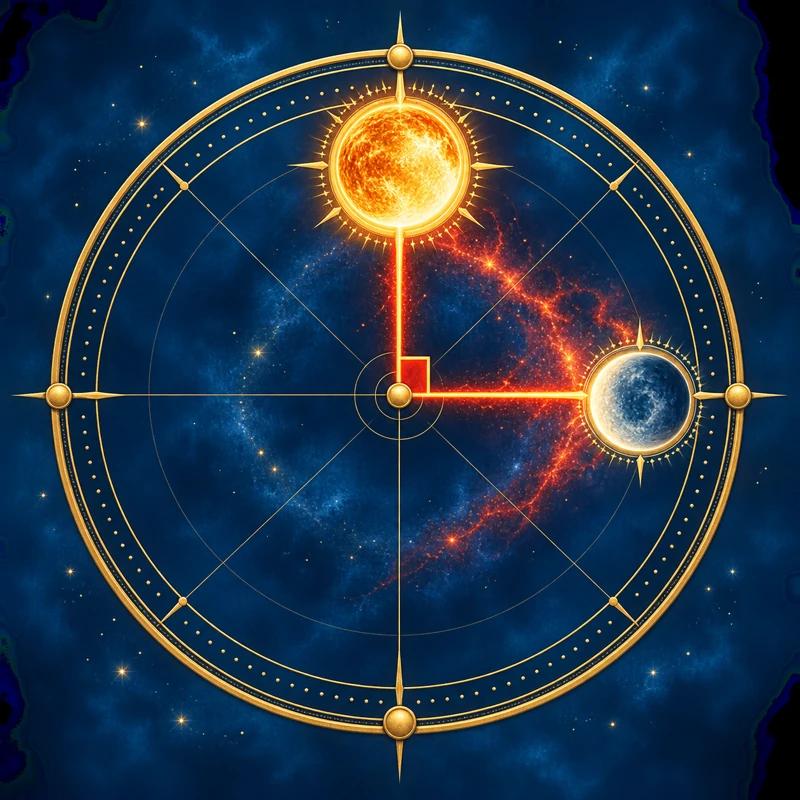
Astrologers also look at the angles between planets. These angles are called aspects.
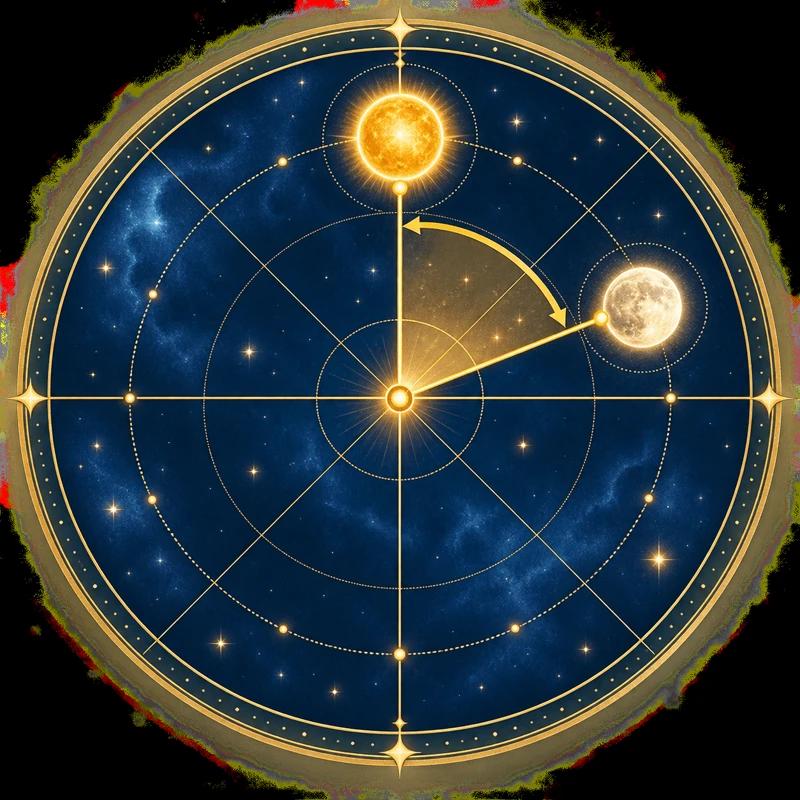
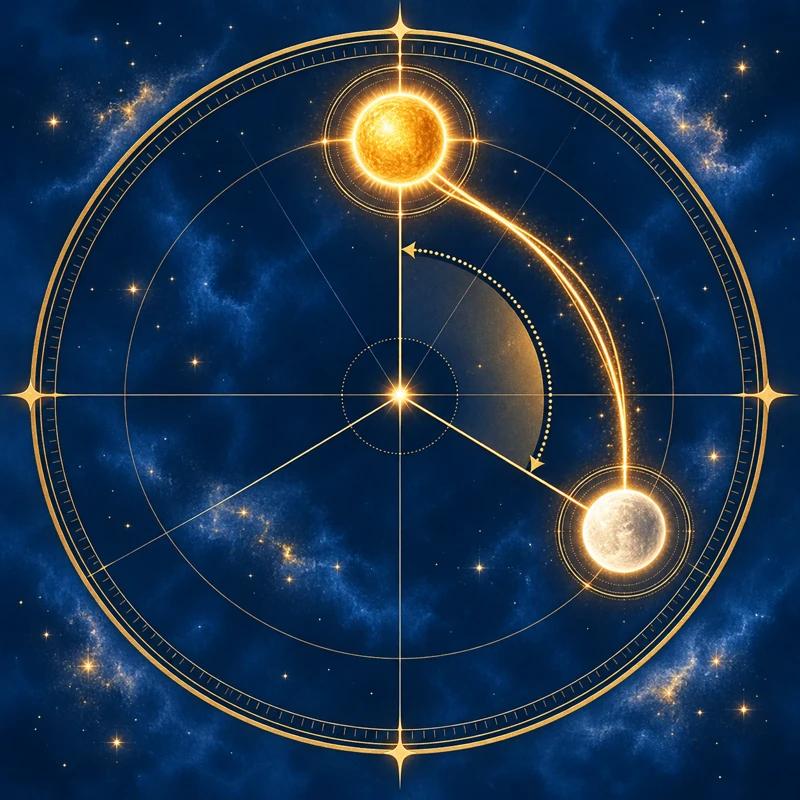
Sylvia's closest one is Mercury square Mars, almost to the exact degree. Mercury is the planet of thinking, talking and writing. Mars is the planet of fight and drive. A square is a sharp angle of 90 degrees. Astrologers say it feels like friction, like two cats in one box.
Put them together and you get words with teeth. Astrologers would say a person with this angle writes fast and writes to win. Her later poems are like that. They are short, sharp and full of fire.
She also had Mars in a smooth trine to Uranus. A trine is an easy angle, like a door that swings open. Uranus is the planet of shocks and sudden new ideas. Mars and Uranus together, astrologers say, bring bursts of energy that come out of nowhere. Keep that in mind for later.
Cambridge, Ted and two children
In 1955 Sylvia won a Fulbright, which is a prize that pays for study abroad. She went to Newnham College, in Cambridge, England.
On 25 February 1956 she went to a party for a new poetry magazine. There she met a young English poet named Ted Hughes. Less than four months later, on 16 June 1956, they married at a church in London. Her mother was the only guest.
For a while they lived in America. Sylvia taught at Smith, her old college. She found it hard to teach and write at the same time. In Boston she went to a poetry class run by the poet Robert Lowell. Another poet there was Anne Sexton.
At the end of 1959 the couple moved back to London. Their daughter, Frieda, was born on 1 April 1960. That same year Sylvia's first book of poems, The Colossus, came out in England.
In 1961 they moved to an old house called Court Green, in Devon, in the English countryside. Their son, Nicholas, was born on 17 January 1962. That summer they began to keep bees. Sylvia's father had studied insects. Now she wrote a group of poems about her own bees.
A monkey, a jewel and the number seven
Chinese astrology gives each year an animal and an element. Sylvia was born in the year of the Water Monkey. Chinese astrologers say Monkeys are quick, clever and love to solve puzzles. Water adds deep feeling and a good memory.
Chinese astrologers also look at the day you were born. They call it your Day Master. It stands for you, yourself. Sylvia's Day Master is yin Metal. Yin Metal is not a big iron gate. It is a jewel, a ring or a fine blade. Chinese astrologers say yin Metal people are sharp, careful and want things just right.
That fits a writer who went over every word. She cared about each line in a poem, the way a jeweller cares about each cut on a stone.
Numerology turns your birth date into a number. You add up all the digits of the date until you get one digit. That is your Life Path number. Sylvia's is 7. Numerologists say 7 is the number of the deep thinker who looks inside. Years of diaries and journals make that easy to believe.
What the slow planets were doing
The slow planets, from Jupiter out to Pluto, take years to cross one sign. Astrologers watch for the days they touch the planets in a birth chart.
When her father died in 1940, Pluto made an almost exact square to her Scorpio Sun. Pluto is the planet of endings and deep change. Astrologers would say it pressed hard on the centre of her chart, at a very young age.
When Nicholas was born in January 1962, Saturn had come back to near the place it held when she was born. Astrologers call this the Saturn return. It comes around age 29, and they say it is a time of growing up for good.
That October, she and Ted split up. Then something came out of her in a rush. She wrote most of the poems she is best known for in a few short months. One, called Ariel, is dated 12 October 1962. That day Jupiter made a smooth trine to her Sun, and Uranus, the planet of sudden ideas, made a smooth angle to it too.
I think those autumn poems are the best thing she ever wrote.
Her last winter, and what she left
In December 1962 Sylvia moved back to London with the children. She rented a flat in a house where the poet W. B. Yeats had once lived. That pleased her very much.
It was one of the coldest winters on record. Her depression came back. She went to her doctor, who gave her medicine and set up a nurse to help at home. In January 1963 The Bell Jar came out, under a made-up name, Victoria Lucas.
Sylvia Plath died in London on 11 February 1963, by suicide. She was 30. Her illness was real, and it was not her fault. The stars did not make it happen. A chart is a map, not a set of orders.
Two years later her book Ariel came out. People who read it had never seen poems like them. In 1982 she won the Pulitzer Prize for Poetry, one of the biggest prizes a poet can win. Her journals came out that same year.
Here is the thing to take away. Sylvia wrote everything down: her days, her anger, her love, her bees. She worked hard at every word. If you like to write, keep a notebook. Your own words matter, even the ones you only show to yourself.
The sky at Sylvia’s turning points
Worked out for each date from the same ephemeris as the chart above. Only the slow planets are shown, and a contact counts when it is within 3°.
· age 8
Her father, Otto, dies
Jupiter in Taurus, Saturn in Taurus, Uranus in Taurus, Neptune in Virgo, Pluto in Leo · Pluto square to Sylvia’s Sun (0.2°); Neptune trine to Sylvia’s Saturn (1.7°)
Pluto in Leo made a square to her Scorpio Sun, less than a degree from exact. Astrologers would call it heavy pressure on the core of the chart, at age eight.
· age 23
Marries Ted Hughes in London
Jupiter in Leo, Saturn in Scorpio, Uranus in Leo, Neptune in Libra, Pluto in Leo · Neptune square to Sylvia’s Saturn (0.9°); Saturn sextile to Sylvia’s Saturn (1°); Neptune trine to Sylvia’s Ascendant (1.6°); Saturn square to Sylvia’s Ascendant (1.7°); Uranus opposite Sylvia’s Saturn (1.7°); Jupiter opposite Sylvia’s Ascendant (2.9°); Pluto opposite Sylvia’s Ascendant (2.9°)
Jupiter and Pluto in Leo stood opposite her Aquarius rising sign, the point astrologers use for the self and how others meet you. Uranus in Leo was opposite her Saturn. A sudden, big meeting with another person.
· age 27
Daughter Frieda is born
Jupiter in Capricorn, Saturn in Capricorn, Uranus in Leo, Neptune in Scorpio, Pluto in Virgo · Pluto sextile to Sylvia’s Sun (0.1°); Jupiter sextile to Sylvia’s Sun (1.1°); Saturn trine to Sylvia’s Jupiter (1.8°)
Pluto in Virgo and Jupiter in Capricorn both made gentle sextiles to her Scorpio Sun. Astrologers call a sextile a friendly, helping angle. A calm and hopeful sky.
· age 29
Son Nicholas is born
Jupiter in Aquarius, Saturn in Aquarius, Uranus in Leo, Neptune in Scorpio, Pluto in Virgo · Uranus opposite Sylvia’s Ascendant (0.4°); Jupiter sextile to Sylvia’s Midheaven (0.5°); Saturn square to Sylvia’s Sun (2.6°); Neptune sextile to Sylvia’s Jupiter (2.8°); Saturn on Sylvia’s Saturn (3°) · first Saturn return
This was her Saturn return: Saturn in Aquarius was back near the place it held at her birth. Uranus in Leo also stood almost exactly opposite her rising sign. A time of new duties and sudden change.
· age 29
Writes the poem Ariel
Jupiter in Pisces, Saturn in Aquarius, Uranus in Virgo, Neptune in Scorpio, Pluto in Virgo · Uranus sextile to Sylvia’s Sun (0.4°); Saturn square to Sylvia’s Sun (0.6°); Jupiter trine to Sylvia’s Sun (0.9°); Pluto square to Sylvia’s Midheaven (2.6°)
Jupiter in Pisces made a smooth trine to her Scorpio Sun, and Uranus in Virgo made a sextile to it. Saturn in Aquarius made a square. Astrologers would see a rush of ideas, with real strain behind it.
 1
 2
 3
 4
 5
 6
 7
 8
 9
 10
 11
 12