

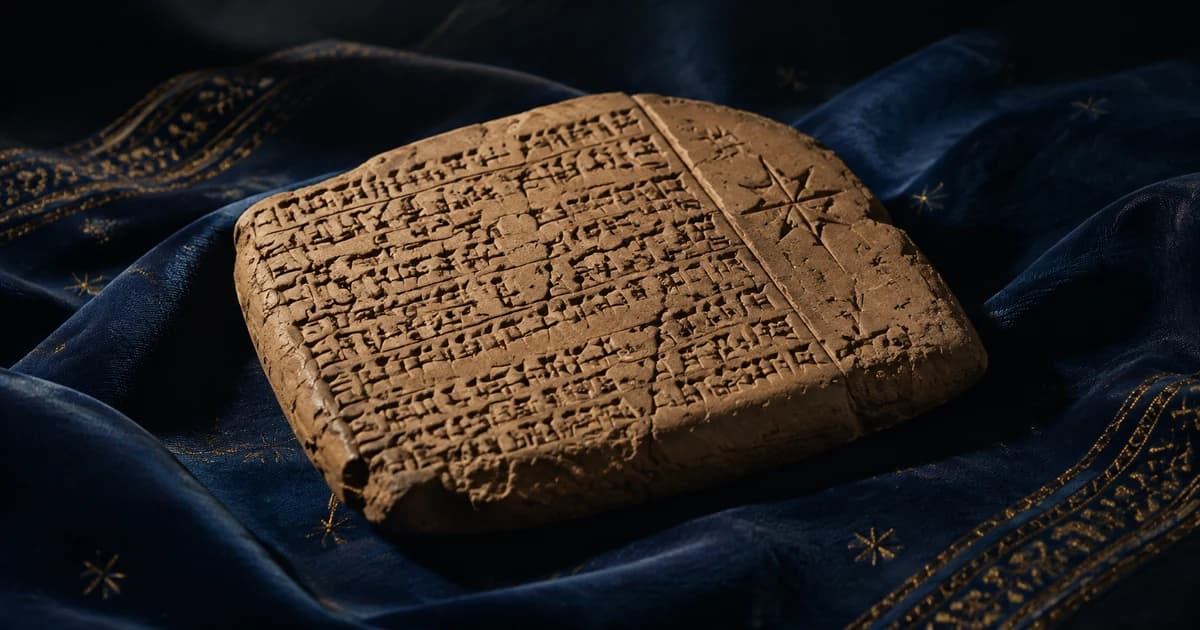
Hellenistic astrology: what the ancient Greeks practised
Whole-sign houses, sect, dignities and lots, and almost none of it survived into the twentieth century.
2 min read · Published 2 September 2026
First, the answer
Hellenistic astrology emerged in the Mediterranean world around the first century BCE, combining Babylonian planetary observation with Egyptian and Greek philosophical frameworks. It used whole-sign houses, sect, essential dignities, lots, profections and zodiacal releasing. Most of that apparatus disappeared from Western practice by the twentieth century and has been recovered over recent decades through translation.
What it contained
Whole-sign houses, one sign per house from the rising sign. Sect. Essential dignities. Lots, including the Part of Fortune. Mechanical timing: profections and zodiacal releasing. Aspects by whole sign. What it lacked is as telling: no outer planets, no asteroids, no psychology, no Sun-sign personality.
How it was assembled
Babylonian astronomy supplied the observations and the zodiac, Egypt the decans, Greek philosophy the cosmos of correspondences. The synthesis produced the personal birth chart, cast for an individual's birth and read for their life. Babylonian astrology was about the state and the king; the natal chart is the Hellenistic invention. Ptolemy is the best-known text and the least typical; Vettius Valens is closer to what was done.
Hellenistic astrology is the version I'd learn if I were starting again. It has rules, and the modern kind mostly has moods.
What was lost, and why
The material passed into the Islamic world, was developed there, and returned to Europe in medieval translation, then declined through the Enlightenment. The nineteenth and twentieth-century revival rebuilt astrology from what remained, which was much less, and the psychological turn replaced rule-based judgement with temperament. Attrition, then reconstruction without the sources.
The recovery
Translation projects of recent decades made the texts available in English for the first time. Sect, dignities, whole-sign houses, profections and releasing are back in active use, and traditional and modern astrology now coexist as different practices. AsterNym uses whole-sign houses and traditional rulerships, stated on every chart. The standard modern account is Chris Brennan's book.
Three more questions
- What is Hellenistic astrology?
- The system formalised in the Mediterranean around the first century BCE, combining Babylonian observation, Egyptian decans and Greek philosophy, using whole-sign houses, sect, dignities, lots and rule-based timing.
- Did the Greeks invent the birth chart?
- The personal natal chart is a Hellenistic contribution. Babylonian astrology was concerned with the state and the king; casting a chart for an individual's birth emerged in the Hellenistic synthesis.
- Is Ptolemy a good guide to Hellenistic astrology?
- Less than his fame suggests. He was giving astrology an Aristotelian footing and omitted much of what practitioners used, including lots. Vettius Valens is closer to typical practice.
 Mira Hale